When the Numbers Lie: The Hidden Gap Between Your Ballistic Data and Your Real-World Shot
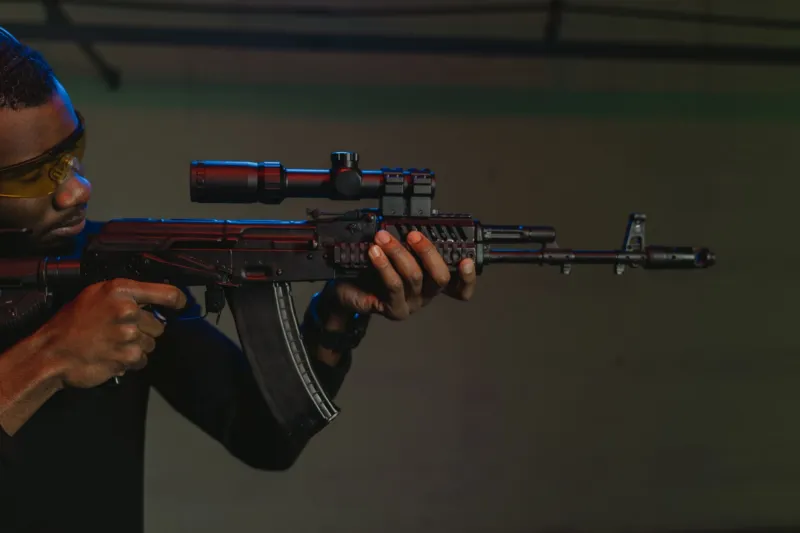
You've done everything right. You've plugged in your muzzle velocity, your bullet's G7 BC, your zero distance, the altitude, the temperature. You've got a firing solution that would make a sniper instructor nod with approval. You settle behind the rifle, dial the dope, and squeeze.
And you miss clean.
If you've hunted long enough in real wilderness — not a manicured shooting bench at a flat-country range, but actual backcountry with wind that changes its mind every thirty seconds and a heart rate that doesn't care about your shot timer — you already know this feeling. The calculator said one thing. The animal told you another. Welcome to the ballistic blind spot, and it's bigger than most hunters want to admit.
The Range Is a Laboratory. The Mountain Is Not.
Controlled range conditions are exactly that — controlled. You're shooting from a stable position, your body is rested, the temperature has been consistent for hours, and you've got time to verify every input before you press the trigger. Those conditions produce reliable data. The problem is that reliable data collected in a laboratory doesn't automatically translate to reliable performance in the field.
The wilderness introduces variables that no app on the market fully accounts for. Wind isn't just a number you plug in — it's a living, shifting force that behaves differently through a canyon than across an open ridge. Terrain creates thermal currents that can push a bullet in directions that defy your wind call. And that's before we even get to you, the shooter, which is honestly where most of the deviation lives.
Your body is not a machine. After three miles of steep elevation gain with a pack on your back, your respiratory rate is elevated, your hands have a slight tremor from muscular fatigue, and your core temperature has shifted. None of that shows up in a ballistic calculator input field. But every single one of those factors affects where that bullet lands.
Shooter Physiology: The Variable Nobody Wants to Admit
Let's talk about what happens to your body — and by extension, your shooting — when you're actually hunting hard.
Elevated heart rate is the obvious one. Even experienced hunters feel it when a mature bull steps out at 500 yards. Your pulse translates directly into barrel movement during the critical milliseconds before and after the shot breaks. That movement might be invisible to the naked eye, but at distance it becomes a very visible miss.
Then there's grip pressure. Fatigue changes how you hold a rifle. A tired hand grips tighter or differently than a fresh one, and inconsistent grip pressure is one of the sneakiest causes of point-of-impact shift. You might be shooting the exact same rifle you zeroed last week, but if your hands are wrung out from a hard approach, you're not shooting it the same way.
Body temperature and layering add another layer of complexity. A cold shooter wearing heavy gloves handles a trigger differently than a shooter in a t-shirt at a summer range session. The physical act of shooting changes, and your muscle memory — built under one set of conditions — has to adapt in real time.
Environmental Chaos: What Your App Can't See
Modern ballistic software is genuinely impressive. Apps like Applied Ballistics, Hornady 4DOF, and similar platforms have dramatically raised the floor for long-range competency in the hunting world. But they're working from inputs you provide, and those inputs are only a snapshot of conditions that are constantly moving.
Density altitude is a perfect example. Your Kestrel gives you a reading, and it's accurate — for that moment, at that location. But if you're shooting across a canyon where the air column between you and the target sits at a different elevation than where you're standing, the actual flight path of your bullet is passing through conditions that never made it into your calculator.
Mirage is another one that gets underestimated. Hunters focused on getting a shot off in a tight window sometimes read mirage poorly or not at all, which means their wind call is already compromised before they even consider the ballistic solution. The calculator can't save you from a bad wind read.
And then there's temperature's effect on your ammunition itself. Factory ammo and handloads both experience muzzle velocity changes with temperature. A load that chronographs at 2,950 fps on a 70-degree afternoon might be pushing 2,880 fps on a 28-degree morning in the Rockies. That's a real shift, and if you haven't accounted for it, your dope is off from the first shot.
What Elite Hunters Do Differently
The hunters who consistently close the gap between calculated solutions and real-world results share a few habits worth paying attention to.
They build field-realistic data, not just range data. Instead of only shooting from a bench to establish their dope, they shoot from field positions — prone with a pack, sitting against a tree, kneeling on uneven ground — and they track how their point of impact shifts between positions. That information gets logged and becomes part of their personal shooting profile.
They stress-test themselves deliberately. Some hunters literally run sprints or do burpees before shooting practice sessions to replicate elevated heart rate. It sounds dramatic, but it builds the ability to manage physiological noise under pressure. Your muscle memory needs to be trained under conditions that mirror what you'll actually face.
They do temperature-specific load testing. If you're planning a November elk hunt in Idaho, test your load in November temperatures, not in August. Velocity data collected in cold conditions is worth more than warm-weather data when you're hunting in cold weather.
They use the calculator as a starting point, not a final answer. The best long-range hunters treat their ballistic solution as an educated estimate and build in the discipline to verify it whenever conditions allow. A cold bore shot at a known distance before a hunt day begins, a quick confirmation at a rock or dirt patch at range — these reality checks are worth more than blind trust in software.
Bridging the Gap
None of this is an argument against using ballistic technology. The tools available to hunters today are genuinely game-changing, and hunters who refuse to use them are leaving performance on the table. But technology works best when you understand its limits.
The ballistic calculator is a powerful tool operating in an imperfect world, and the imperfect variable it can't account for is you — your fitness level, your stress response, your grip, your fatigue. The hunters who shoot well in the field are the ones who've done the honest work of understanding how they personally deviate from ideal conditions and have built habits to compensate.
The wilderness doesn't grade on a curve. Your bullet doesn't care what the app said. The only thing that matters at the moment of truth is whether your preparation was honest enough to cover the distance between the screen and the shot.