Heavy Metal Truth: Why Your Ultra-Light Mountain Rifle Might Be Costing You the Shot
Everybody wants to cut ounces in the backcountry. That's not a bad instinct — when you're grinding up a 4,000-foot elevation gain with a full pack, every pound is a negotiation between your knees and your ambition. The ultralight rifle craze has answered that call with carbon-fiber stocks, fluted barrels, and skeletonized everything. Some of these builds are genuinely impressive pieces of engineering.
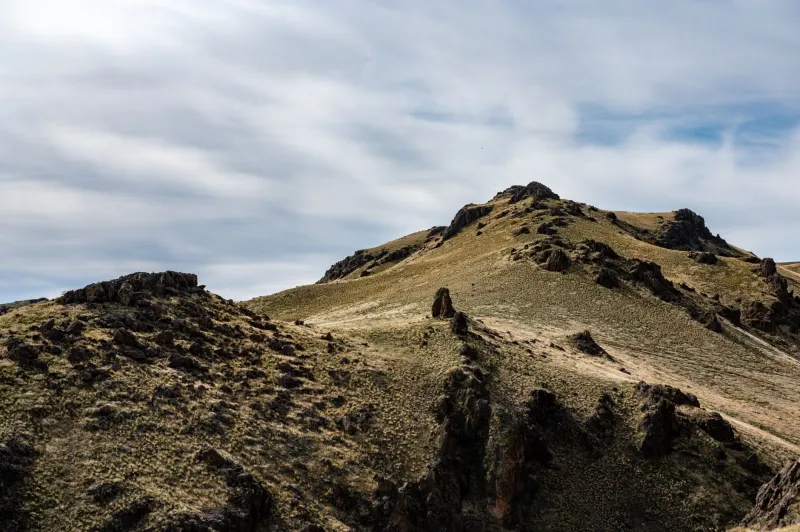
But here's the thing nobody's saying loudly enough at the trailhead: lighter isn't always faster, and faster isn't always better. When you're 11,000 feet up a Colorado ridge with a bull elk standing 400 yards across a canyon, the physics don't care about your pack weight.
The Velocity Myth
Most hunters assume a shorter, lighter barrel equals a slight velocity penalty — something you can compensate for with a hot load and call it a day. The reality is more nuanced. Barrel length directly affects how long the propellant gases have to push the projectile before it exits the muzzle. Go from a 24-inch barrel to a 20-inch to save weight and you're potentially shedding 80 to 120 feet per second depending on your cartridge. With a 6.5 Creedmoor, that gap is manageable. With a .300 Win Mag, you're starting to talk about meaningful energy loss at distance.
Ballistics engineer Dave Kessler, who consults for several custom rifle builders in the Mountain West, puts it plainly: "Guys see a 3-pound rifle and think they've won. But when I run the numbers on what that shorter barrel does to terminal performance at 500 yards, sometimes the math gets uncomfortable. You're not just losing velocity — you're changing the entire energy curve."
At high altitude, the problem compounds. Thinner air does reduce drag, which is one reason mountain hunters often shoot flatter than they expect. But reduced air density doesn't compensate for lost muzzle energy. A bullet that exits the muzzle with less kinetic energy still arrives downrange with less kinetic energy, even if it gets there a little quicker.
Recoil, Stability, and the Weight Equation
Here's the counterintuitive part that competitive mountain hunters have been talking about for a few seasons now: a lighter rifle moves more under recoil. That's basic physics. Less mass means the platform shifts more aggressively when the round breaks, which translates directly to shooter fatigue and — critically — to accuracy degradation across multiple shots.
Jamie Holcomb, a repeat competitor in the Extreme Elk Challenge out of Idaho, learned this the hard way. "I went to a 5.8-pound mountain rifle a few years back and thought I'd cracked the code. Then I ran a field exercise where I shot after a hard uphill carry, four shots in a 90-second window. My groups opened up embarrassingly. The rifle was moving too much, I was already gassed, and it just amplified every mistake."
He's since settled on a build that runs just over seven pounds with a loaded magazine — not a featherweight, but not a tank either. He calls it his "honest weight" — heavy enough to dampen recoil and hold steady in wind, light enough that he's not wrecked after a serious approach.
The Barrel Contour Question
One of the more interesting debates in mountain rifle circles right now involves barrel contour. Manufacturers have gotten extremely good at removing material from barrels without sacrificing rigidity — button-rifled fluted barrels have become almost standard on lightweight builds. But there's a thermal management side to this conversation that doesn't get enough attention.
A heavier barrel profile absorbs and dissipates heat more effectively. In a single-shot hunting scenario, that barely matters. But if you're in a situation where follow-up shots are necessary — or if you spent the morning zeroing at the range before a backcountry push — a pencil-thin barrel can start walking shots as it heats up. Kessler has measured this in testing: "On certain ultra-light builds, we've seen point of impact shift noticeably after three or four rounds. That's not a problem you want to discover on a once-in-a-decade bull."
Where Lightweight Wins — And Where It Doesn't
None of this is an argument against thoughtful weight reduction. There are smart ways to cut pounds without compromising ballistic integrity. Carbon-fiber stocks can shed significant weight without affecting the action or barrel. Titanium components, quality synthetic chassis systems, and modern optics have all gotten lighter without meaningful performance tradeoffs.
The problem is when hunters treat weight reduction as the primary metric rather than a factor in a larger performance equation. A rifle that's half a pound lighter but loses 15% of its terminal energy at 400 yards, develops a wandering zero under field conditions, and punishes you with snappy recoil when you're already exhausted — that's not a win. That's a compromise that shows up at the worst possible moment.
The hunters and engineers who've spent serious time on this tend to land in the same place: build to the lightest weight that still meets your performance requirements, not to the lightest weight possible. Define what you need the rifle to do at realistic distances in your specific terrain, then work backward from there.
The Honest Conversation at the Trailhead
The mountain hunting community has a healthy obsession with fitness and gear optimization, and that's genuinely admirable. But sometimes the culture pushes toward ultralight as a proxy for seriousness — like the guy with the lightest kit is automatically the most capable hunter in the field. That's not always true.
Carrying an extra six ounces in barrel steel might mean the difference between a clean kill at 450 yards and a marginal hit that sends you on a brutal recovery in fading light. The elk doesn't care how light your rifle is. The mountain doesn't either.
Do the work. Know your ballistics. Understand what your specific setup actually delivers at distance — not what the marketing says, but what your chronograph and your target data confirm. And then make the weight call with clear eyes.
Sometimes the smartest thing you can carry into the backcountry is a little extra metal.