Thin Air, Tight Groups: What Really Happens to Your Bullet Above 10,000 Feet
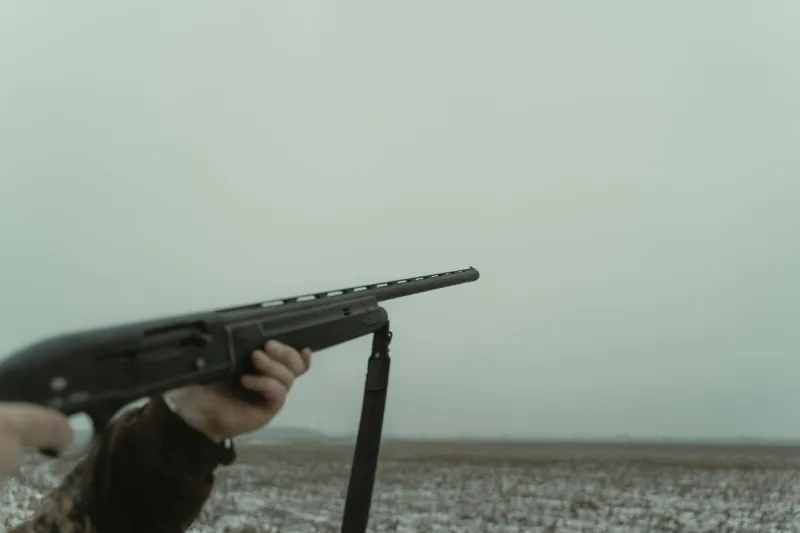
You've spent months at the range. Your dope card is dialed. You trust your rifle like a close friend. Then you climb above 10,000 feet, take a 400-yard shot at a bull elk, and watch the round sail clean over its back.
Welcome to high-altitude hunting, where the physics don't care about your preparation.
Elevation changes everything — not just for your cardiovascular system, but for the tiny projectile you're asking to fly true across a mountain canyon. If you're heading into serious vertical terrain this season, understanding what altitude does to your bullet isn't optional. It's the difference between a clean kill and a long, frustrating pack-out with an empty game bag.
The Air Up There Is Working Against You (Sort Of)
At sea level, air is dense. That density creates drag on a bullet in flight, slowing it down and pulling it toward the earth faster than it would otherwise fall. The higher you climb, the thinner the air gets — and the less drag your bullet experiences.
On paper, that sounds like good news. Less drag means the bullet retains velocity longer, which means flatter trajectory and less drop, right? Mostly, yes. But the reality is more nuanced than a simple "shoot flatter" adjustment.
"The mistake guys make is thinking altitude just means they can hold a little lower," says Travis Holloway, a high-country hunting guide based out of Cody, Wyoming, who has been putting clients on game above 11,000 feet for over a decade. "It's not that simple. You've got density altitude, you've got temperature, you've got the fact that wind at elevation does things it never does down in the valley. All of it stacks up."
Holloway's point about density altitude is critical. Density altitude isn't just your actual elevation — it's a calculated value that accounts for temperature and barometric pressure together. A warm day at 10,000 feet can produce a density altitude closer to 12,000 feet. A cold morning at the same location might drop it back down. Your ballistic calculator needs current conditions, not just GPS elevation, to give you an accurate firing solution.
What the Numbers Actually Look Like
Let's make this concrete. Take a standard .300 Win Mag load pushing a 200-grain bullet at around 2,850 feet per second. At sea level, shooting at 500 yards, you might be looking at roughly 44 inches of drop from a 100-yard zero. Run those same numbers at 10,000 feet with a density altitude correction applied, and that drop can shrink to somewhere around 38 or 39 inches — a meaningful difference, especially if you haven't adjusted your dope.
But here's where hunters get into trouble: they know the bullet drops less, so they assume they can simply hold a little lower and go. What they don't account for is the shift in wind sensitivity.
Dr. Aaron Schreiber, a ballistics consultant who has worked with competitive long-range shooters and guided hunters in the Colorado Rockies, puts it plainly. "At altitude, your bullet is moving through less air. That means it's also getting less aerodynamic correction from the air itself. Your bullet becomes more sensitive to wind inputs, not less. A 10 mph crosswind at 8,000 feet is going to push that round further off course than the same wind at 2,000 feet."
That counterintuitive reality catches even experienced hunters off guard.
Mountain Wind Is a Different Animal
Talk to anyone who's spent serious time hunting the high country and they'll tell you the same thing: wind above treeline is unpredictable in ways that valley hunting never prepares you for.
Thermal currents, ridgeline deflection, and the way drainages funnel air create wind environments that shift direction and speed within seconds. A reading on your Kestrel at your shooting position may have almost nothing to do with what's happening at the 400-yard mark downrange.
"I tell every client to take at least three wind readings before committing to a shot," Holloway says. "And even then, you're making an educated guess. The mountain decides, not your meter."
The practical takeaway is to build a wider wind buffer into your shot selection at altitude. If you'd take a shot at sea level with 12 mph of crosswind, consider tightening that threshold to 8 mph when you're up high. The penalty for a wind-pushed miss at altitude is compounded by the terrain — steep slopes, rocky draws, and the sheer difficulty of recovering a wounded animal in vertical country.
Dialing Your Dope for the High Country
So what do elite mountain hunters actually do to prepare? A few consistent habits emerged from our conversations.
Build an altitude-specific dope card. Most modern ballistic apps — Applied Ballistics, Hornady 4DOF, Kestrel's built-in solver — allow you to run calculations for multiple density altitudes. Before your hunt, build a card that covers the range of elevations you expect to encounter. Know your adjustments for 8,000, 10,000, and 12,000 feet before you leave the trailhead.
Test at elevation before the season. This one sounds obvious, but a surprising number of hunters don't do it. If you can access a shooting range at high elevation — or if you're doing a pre-season scouting trip — bring your rifle and verify your dope in the actual conditions. Paper doesn't lie.
Respect the cold. Temperature swings at altitude are dramatic. A warm afternoon can drop 30 degrees by sunset. Cold ammunition runs at lower pressure, which affects muzzle velocity. A load that chronographs at 2,900 fps in August might be pushing 2,800 fps on a cold October morning. That's a real difference at distance.
Slow down before you shoot. Altitude affects your physiology as much as your ballistics. Elevated heart rate from the climb, reduced oxygen to the brain, and physical fatigue all degrade shooting performance. Give yourself time to settle before you touch the trigger. Your fundamentals fall apart faster at altitude than you think.
The Mountain Rewards Preparation
High-altitude hunting is one of the most demanding pursuits in the American outdoor tradition. It asks everything of you — your body, your gear, your patience, and your skill. The ballistics piece is solvable, but only if you take it seriously before you're standing on a ridgeline at 11,500 feet with a bull in the crosshairs and your heart hammering in your ears.
Understand the physics. Build the dope. Test it in the real world. And when the shot presents itself, trust the work you put in before you ever left the truck.
The thin air doesn't have to beat you. It just demands that you come prepared.