From Gut Feeling to Cold Hard Data: How Modern Ballistics Science Is Changing the Way We Hunt
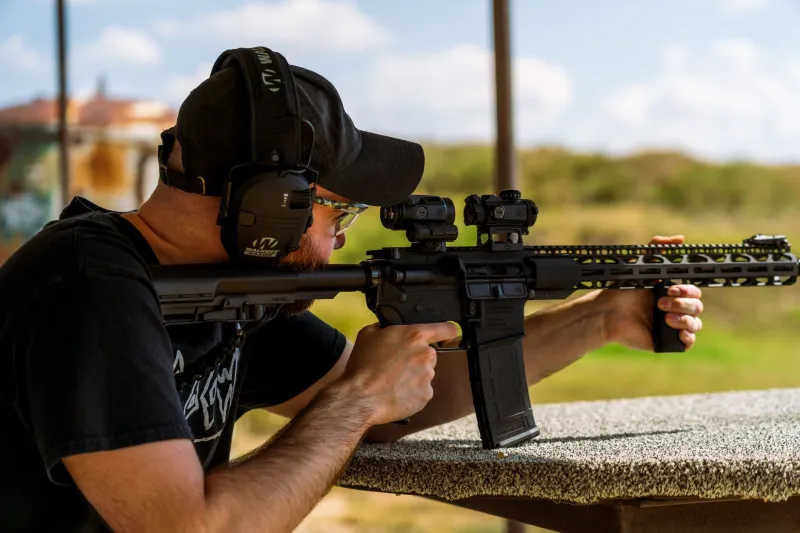
There's a certain romance to the old-school hunter — the guy who's been shooting the same rifle for 40 years, trusts his instincts, and calls his shots by feel. We respect that deeply. But let's be honest: when a mature whitetail steps out at 380 yards in a crosswind, instinct alone isn't going to cut it. That's where science steps in, and it's not here to replace the hunter — it's here to make him deadlier.
Modern ballistics technology has quietly undergone a revolution over the last decade, and the guys who've been paying attention are shooting tighter groups, making cleaner kills, and coming home with more tags filled. Here's what's happening under the hood.
The Three Pillars of Ballistics Every Hunter Should Know
Ballistics breaks down into three distinct phases, and most hunters only think about one of them.
Internal ballistics covers everything that happens inside your barrel — the ignition of the powder charge, the buildup of propellant gases, and how that energy transfers to the bullet before it ever sees daylight. This is why barrel length matters, why your powder selection affects velocity, and why a quality trigger job can tighten your groups without changing a single thing about your load.
External ballistics is where most of the interesting stuff happens. Once that bullet leaves the muzzle, it's immediately fighting gravity, air resistance, wind, and — at longer ranges — even the rotation of the Earth. The Coriolis effect isn't just a fun fact for geography class; at ranges beyond 800 yards, it can push your bullet several inches off target depending on which direction you're shooting.
Terminal ballistics is the endgame: what happens when your bullet meets its target. Expansion rates, penetration depth, energy transfer — this is what determines whether your shot is lethal or just educational for the animal.
Most hunters spend all their time thinking about external ballistics, which makes sense. But neglecting the other two is leaving real accuracy on the table.
Wind: The Variable That Humbles Everyone
Ask any long-range shooter what beats them most often, and the answer is almost always wind. Unlike gravity — which is consistent and perfectly predictable — wind is chaotic, layered, and constantly changing between you and your target.
The old method was to read the mirage through your scope, check the grass, maybe lick your finger. That still matters. But modern hunters are supplementing that with tools like the Kestrel wind meter, which measures not just wind speed but temperature, humidity, altitude, and barometric pressure — all variables that affect how your bullet flies.
Here's a number that puts it in perspective: a 10 mph full-value crosswind on a .308 Win firing a 168-grain bullet will push that projectile roughly 9.5 inches at 500 yards. At 700 yards, you're looking at close to 20 inches of drift. That's not a miss — that's a gut shot on a deer, and that's the kind of outcome nobody wants.
Learning to read wind across the entire flight path — not just at the muzzle — is one of the most valuable skills a hunter can develop, and it's one area where technology genuinely helps bridge the knowledge gap.
Ballistic Coefficients: The Number That Matters More Than Caliber Debates
Hunters love to argue calibers. .308 vs. 6.5 Creedmoor. .30-06 vs. .300 Win Mag. And while those conversations have their place, the number that actually predicts how well a bullet will perform in the real world is the ballistic coefficient (BC).
The BC is essentially a measure of how efficiently a bullet cuts through air. A higher BC means the bullet retains velocity better, resists wind deflection more effectively, and drops less over distance. This is why the 6.5 Creedmoor has made so many converts — not because it's a magic caliber, but because it fires high-BC bullets that stay supersonic farther downrange than many heavier alternatives.
When you're selecting loads for hunting, pay attention to the G7 BC (which is more accurate for long, sleek hunting bullets than the older G1 standard). Your ballistic app will use this number to model your trajectory, and the more accurate that input, the more accurate your firing solution.
Smartphone Apps: Professional-Grade Data in Your Shirt Pocket
Ten years ago, getting a precise firing solution for a 500-yard shot required either expensive proprietary software or a very patient calculator session. Today, apps like Applied Ballistics, Hornady 4DOF, and Kestrel's companion software put that same computational power in your pocket for under $30.
These apps take inputs — your muzzle velocity, bullet BC, zero range, altitude, temperature, wind speed and direction — and spit out a firing solution in seconds. Some will even account for the angle of your shot (critical for mountain hunters shooting steep uphill or downhill), the Coriolis effect, and spin drift caused by your bullet's rotation.
The key is feeding them accurate data. Chronograph your actual loads — don't trust the number on the box. Your barrel length, your altitude, your specific lot of ammunition all affect real-world velocity. Garbage in, garbage out, as they say.
Once you've got solid data, build a dope card — a laminated cheat sheet with your confirmed holds at various distances — and tape it to your stock. Technology is great until your phone dies at 9,000 feet in January. The dope card never runs out of battery.
Putting It All Together in the Field
All the science in the world doesn't replace trigger time and field craft. The hunters who benefit most from ballistics technology are the ones who've already put in the work at the range — who know their rifles intimately, who can read terrain and wind, and who have the discipline to pass on a shot when the conditions aren't right.
Ballistics science isn't a shortcut. It's a force multiplier for hunters who are already doing the work. It closes the gap between where you're aiming and where your bullet actually goes, and in a sport where ethical, clean kills matter above everything else, that gap is worth closing.
Get out to the range. Learn your data. Trust the math. And then trust yourself.
That's how you make the shot count when it matters most.