When the Wilderness Turns on You: 7 Rules Every Solo Hunter Needs to Live By
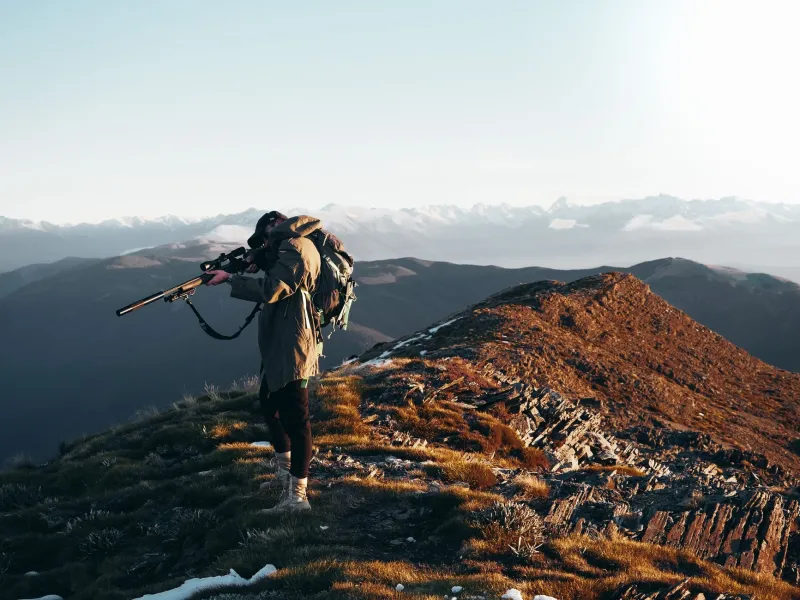
There's something deeply satisfying about heading into the backcountry alone. No committee decisions. No waiting on a partner. Just you, your rifle, and a few hundred thousand acres of wild country. Solo hunting is a legitimate tradition in this country, and a lot of the best stories start with one guy, one tag, and a long walk in.
But the wilderness doesn't care about your experience level, your expensive gear, or how many miles you've got under your boots. Things go wrong. Gear fails. Weather moves fast. People get turned around in country they thought they knew cold. Every year, search and rescue teams pull hunters out of situations that started as routine trips and turned into something else entirely — sometimes because of bad luck, but more often because of a series of small decisions that compounded into a real problem.
If you're going out solo, these seven rules aren't optional reading. They're the framework that keeps a bad day from becoming a disaster.
Rule 1: Tell Someone the Actual Plan — Not the Vague Version
This sounds basic, but most hunters blow it. Telling your wife you're "going up near the ridge" isn't a trip plan. A real trip plan includes your specific trailhead (with GPS coordinates if possible), your intended route, your camp location if you're staying overnight, and — critically — the exact time and date at which someone should call search and rescue if they haven't heard from you.
Leave it written down. Don't just tell someone verbally and assume they'll remember the details when they're panicked and on the phone with dispatch. A laminated card on the kitchen counter with your truck's make, model, and license plate has saved lives. Be that specific.
Rule 2: Your First Instinct After Something Goes Wrong Is Usually Bad — Wait Five Minutes
When your GPS dies, when you realize you've been walking the wrong drainage for an hour, when you twist an ankle a long way from the truck — the immediate emotional response is to react fast and decisively. Resist it.
Panic-driven decisions almost always make things worse. The hunter who realizes he's lost and immediately starts moving faster in the wrong direction is now lost and tired and possibly heading into worse terrain. Stop. Sit down. Drink some water. Give yourself five minutes to actually think before you do anything.
In a genuine emergency, five minutes of clear thinking is worth an hour of frantic movement. Slow down to speed up — it's counterintuitive, but it works.
Rule 3: Navigation Redundancy Is Non-Negotiable
Your phone is not a navigation system. It's a navigation system until the battery dies, the screen cracks, or you drop it crossing a creek. Every solo hunter heading into serious backcountry needs at minimum three navigation tools: a quality GPS unit with fresh batteries, a paper topo map of the area, and a compass — plus the knowledge to actually use them.
Print your maps before you go. Download your offline GPS maps before you lose cell service. And practice with your compass at home so that the first time you need to shoot a bearing isn't when you're turned around in a whiteout at dusk.
The Garmin inReach series deserves a specific mention here — it's a satellite communicator that works where cell service doesn't exist, and for solo hunters in remote areas, it's arguably the single best safety investment you can make.
Rule 4: Treat Every Injury Like It Could Get Worse — Because It Can
A sprained ankle on day one of a five-day elk hunt isn't just an inconvenience. It's a potential evacuation situation if you don't manage it correctly. A small cut on your hand that you ignore can become infected in the field faster than you'd expect, especially in wet conditions.
Carry a real first aid kit — not a gas station kit with four bandages and a packet of aspirin. Know how to use everything in it. Take a wilderness first aid course if you're serious about solo backcountry hunting; a weekend WFA class will teach you more practical field medicine than you'd imagine.
The mindset shift is this: in the backcountry alone, you are your own first responder. There's no one else coming for a while. Treat yourself accordingly.
Rule 5: Weather Moves Faster Than You Think — Build in a Margin
Mountain weather in particular is notoriously fast and brutal. A clear morning in the Rockies or the Cascades can turn into a full blizzard by early afternoon, and if you're above treeline when that happens, you have a serious problem.
Check the forecast religiously before you go, but don't trust it completely. Build margin into your day: be off exposed ridges by noon if afternoon storms are even a possibility. Know where your bailout routes are before you need them. Carry gear for conditions one full step worse than what's predicted — if they're calling for rain, bring gear for snow.
Hypothermia can set in at temperatures well above freezing when you're wet and the wind picks up. That's not a dramatic edge case — it's a scenario that happens to experienced outdoorspeople every season. Respect the weather.
Rule 6: Ego Has No Place in Field Decisions
This one is uncomfortable but important. A lot of hunters end up in trouble because they pushed when they should have pulled back — took a sketchy shot and had to track a wounded animal into a drainage they never should have entered at last light, or kept going toward their target ridge when the weather was clearly deteriorating because they'd driven six hours and didn't want to waste the trip.
The backcountry will give you another chance. The tag will come around again next year. Your hunting partners and family need you to come home in one piece more than they need you to punch that tag.
Knowing when to back off is not weakness — it's the highest form of field judgment. The hunters who've been doing this for 30 years have all got stories about the time they turned around, and they'll tell you it was the right call every time.
Rule 7: Carry the Ten Essentials — Every Single Time, No Exceptions
The classic Ten Essentials list has been around since the 1930s for a reason: it works. Navigation tools, sun protection, insulation, illumination, first-aid supplies, fire-starting materials, repair tools and a knife, nutrition, hydration, and emergency shelter. Every solo hunter going into the backcountry should have all ten covered, even on a day hunt.
People get into trouble on day hunts more often than on overnight trips, precisely because they underpack. "I'm just going out for the morning" is how a lot of survival stories begin.
A lightweight bivy sack, a fire starter, a headlamp with extra batteries, a water filter, and enough food for an unplanned overnight stay adds maybe three pounds to your pack. That three pounds might be the most important weight you ever carry.
Solo hunting is worth doing. The solitude, the self-reliance, the unmediated connection with wild country — there's nothing quite like it. But it demands a level of preparation and decision-making discipline that group hunting can sometimes paper over. Go out there. Hunt hard. And make sure you come back with stories worth telling.