Comfort Kills: How Your Best Hunting Spot Is Training You to Fail
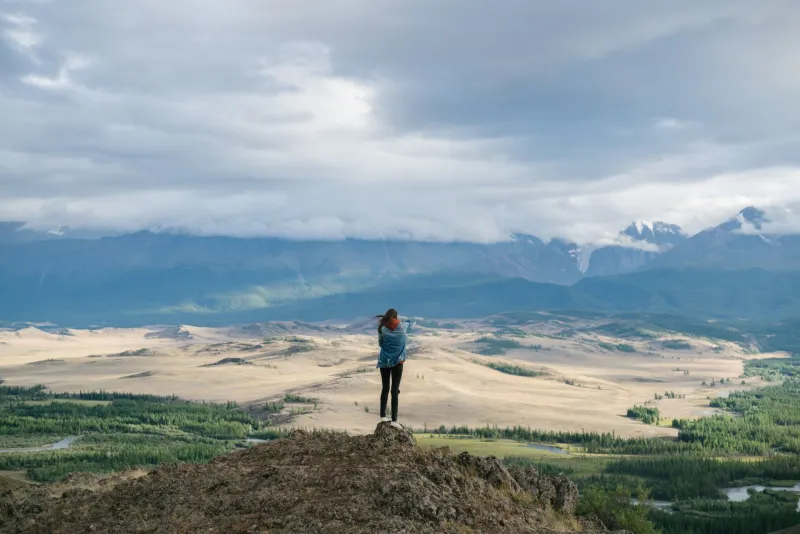
There's a particular kind of confidence that builds up after a few good seasons in the same country. You know where the thermals shift by mid-morning. You know which saddle the elk use to cross before first light. You've got a mental map so dialed in you could walk it blind. That knowledge feels like an edge — and for a while, it is.
But here's what nobody tells you at the tailgate: the moment you stop questioning your favorite ground, you start losing it.
The Comfort Trap Has a Body Count
Veteran hunters across the American West and Southeast have watched it happen — sometimes to themselves, more often to guys they know. A hunter spends three or four seasons hammering a particular drainage. Tags out regularly. Starts to consider it "his" spot. Then one year, nothing. The sign dries up. The patterns evaporate. The animals are simply gone — or worse, they're still there, just operating on a completely different schedule that he never saw coming because he stopped paying attention.
Mark, a mule deer hunter out of western Colorado, described it plainly: "I had a buck I'd watched for two years. Same ridge, same water, same time of day. Third year I showed up and hunted it exactly the same way. I never even saw him. Found out later a buddy of mine spotted him two drainages over. That deer figured me out before I figured him out."
That's not bad luck. That's adaptation. And game animals — especially mature ones — are remarkably good at it.
Animals Don't Forget, They Adjust
Whitetail research has documented what any serious deer hunter already suspects: mature bucks in pressured areas shift their core ranges, alter their movement windows, and essentially ghost entire portions of their home territory in response to repeated human intrusion. Elk do the same thing on a larger scale, sometimes pushing miles out of traditional corridors after a few bad encounters.
The mechanism isn't complicated. It's pressure and pattern recognition. When a predator — human or otherwise — shows up in the same place at the same time doing the same thing, prey animals don't need to understand why that location is dangerous. They just need to learn that it is. And they do, faster than most hunters give them credit for.
The problem is that success reinforces the exact behavior that eventually poisons the well. You tagged a bull in that basin. So you go back. You tag another one. Now the pattern is set — not just in your head, but in the behavior of every animal that survived those encounters and every animal that watched them happen.
Predictability Is the Real Predator
Here's the uncomfortable truth: in the backcountry, the most dangerous thing you can become is predictable. Not to other hunters. To the animals.
The hunters who consistently punch tags year after year in hard-pressured country tend to share one trait that doesn't get talked about enough — they treat their best spots like they're trying to protect them from themselves. They rotate entry routes. They change their timing by days or weeks. They'll deliberately sit out a spot for an entire season just to let it breathe. They're hunting the same country, but they're never hunting it the same way twice.
That discipline is harder than it sounds. When you've got a spot that's produced, the pull to go back and do exactly what worked is almost gravitational. Walking away from a proven location — even temporarily — feels like leaving money on the table. But the hunters who think in multi-year timelines understand that a spot burned hard for three seasons straight is worth a fraction of a spot managed carefully over a decade.
When the Map Becomes a Cage
Familiarity with terrain is a genuine asset. Reading country, understanding water, knowing where feed concentrates in different seasons — that knowledge takes years to build and it's legitimately valuable. The problem isn't knowing your ground. The problem is only knowing your ground.
Hunters who limit themselves to a handful of familiar locations are also limiting their ability to read new sign, adapt to changing conditions, and respond when animal behavior shifts. The mental flexibility that makes a hunter dangerous in the field gets rusty when it isn't used. You start fitting the evidence to your expectations instead of updating your expectations based on the evidence.
This is where backcountry operators who treat hunting like a craft — rather than a tradition — pull away from the pack. They're scouting new drainages even when they don't have to. They're hunting marginal country on off years just to build map knowledge. They're staying uncomfortable on purpose, because they understand that comfort in the field is almost always a lagging indicator of future failure.
How to Break Your Own Pattern
The fix isn't complicated, but it does require some honest self-assessment. Start by mapping out your last three to five seasons — where you hunted, when you went in, what routes you used, where you set up. If that map looks like the same four or five locations on repeat, you already know what you need to do.
Rotate your entry and exit routes even when you're returning to familiar ground. Change your timing by at least a few days in either direction each season. Identify at least one entirely new area to scout and hunt every year, even if it doesn't produce. Let your best spots rest — a full season off a heavily hunted location will often reset animal behavior in ways that make the following year dramatically more productive.
And maybe most importantly, get ruthless about challenging your own assumptions. When you find yourself thinking "they're always in the timber by nine" or "that bench never holds animals in November" — that's exactly the kind of calcified thinking that gets you beaten by a deer with a smaller brain and sharper survival instincts.
The Best Ground You've Never Hunted
There's a version of your hunting country you haven't seen yet — the version that exists when you're not there, when you're not expected, when the animals have had enough time to relax back into their natural patterns. The hunters who find that version consistently are the ones willing to give up the security of the familiar in exchange for something harder to quantify but far more valuable: genuine unpredictability.
Your favorite spot made you. Don't let it break you.
Out here at Lost River, we've always believed the backcountry rewards the adaptable and punishes the comfortable. The wild doesn't care about your track record. It only responds to what you're doing right now — and whether you're doing it differently enough to matter.