Boutique Bullets, Budget Results: The Dirty Truth About Premium Ammo in the Field
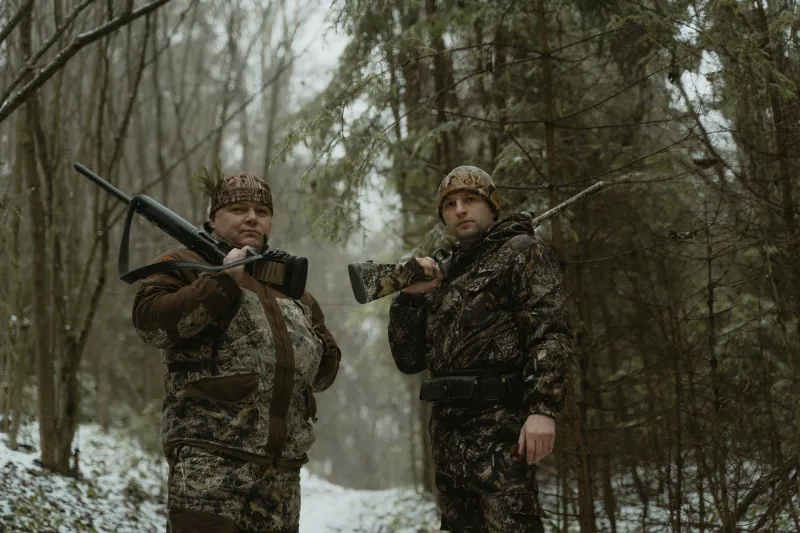
There's a particular kind of confidence that comes from dropping $80 on a box of ammunition. You crack the lid, admire the uniformly polished brass, read the spec sheet one more time, and feel like you've done everything right. The bullet is engineered to sub-thousandth tolerances. The powder charge is weighed to the grain. The whole package looks like something NASA would be proud of.
Then a bull elk steps into a clearing at 340 yards, your heart rate doubles in about four seconds, and suddenly none of that matters.
Here's the thing nobody in the premium ammo business wants to talk about: the gap between laboratory performance and field performance is enormous. And in many documented cases, that $80 box of boutique rounds actually puts you at a disadvantage compared to a $28 box of quality factory loads you've been shooting all summer.
What the Spec Sheet Is Actually Telling You
When a premium ammunition manufacturer publishes sub-half-MOA groups, they're telling you what happened when a trained technician fired that ammo from a machine rest, in controlled temperature conditions, with a barrel that had been broken in and cleaned to factory spec. That's useful information — but it's information about a scenario that has essentially nothing to do with hunting.
The consistency argument is real. Premium ammo genuinely does produce tighter standard deviations in muzzle velocity. Extreme spreads are lower. Bullet-to-bullet weight variation is minimized. On paper, in a controlled environment, you will see measurable accuracy improvements.
But here's where the math breaks down. At 300 yards, the practical accuracy difference between ammo with a 12 fps extreme spread and ammo with a 22 fps extreme spread is somewhere around half an inch of vertical deviation. Half an inch. On a standing elk, that's irrelevant. On a mule deer quartering away at distance, it's still well within the ethical kill zone if you've done your job.
The variable that actually determines whether you make that shot isn't the ammo. It's you.
The Human Factor Nobody Wants to Admit
Colorado outfitter and professional guide Marcus Delray has been putting clients on big game for nineteen years. He's watched hunters show up with $120-per-box match-grade hunting rounds and miss shots that should have been straightforward. He's also watched working ranchers with decades of field experience dump a box of Federal Power-Shok into a bull at 280 yards without a second thought.
"The most dangerous thing I see is a hunter who spent so much on his ammo that he's afraid of it," Delray says. "He's shot maybe two boxes through his rifle because each round costs four dollars. He doesn't know that gun. He doesn't know how it cycles, how it recoils, what the trigger feels like when his hands are cold. That's the problem."
This is the precision paradox in its most concrete form. Premium ammunition is marketed as the solution to shooter error, but the price point actively prevents the volume shooting that actually reduces shooter error. You cannot buy your way to trigger time. You can only shoot your way there.
A hunter who has put 400 rounds of mid-grade factory ammo through his rifle over a summer of practice is fundamentally a different shooter than one who fired 40 rounds of premium hunting loads and called it preparation. The first shooter has built muscle memory, identified his natural point of aim, learned how his breathing affects the reticle, and developed the automatic mechanics that survive an adrenaline dump. The second shooter has a pretty brass collection.
The Testing That Changes Minds
Several independent ballistics researchers and competitive long-range shooting communities have run controlled comparisons between premium boutique hunting ammo and quality mid-tier factory loads — Federal, Hornady American Whitetail, Winchester Deer Season XP — in simulated field conditions. The results consistently show something the industry doesn't advertise.
When shooters are introduced to physical stress before firing — elevated heart rate, time pressure, awkward field positions — the accuracy gap between premium and standard ammo narrows dramatically or disappears entirely. In some test series, standard loads outperformed premium options when fired by stressed shooters, simply because those shooters had logged more time behind that specific load and were more mechanically comfortable with it.
Competitive shooter and precision rifle series competitor Dana Whitfield puts it plainly: "I shoot mid-grade factory in practice because I can afford to shoot a lot of it. I know exactly how my rifle behaves with that ammo. By the time I transition to match ammo for competition, I'm so dialed in mechanically that the ammo upgrade is just a small refinement on top of a solid foundation. Hunters who skip that foundation and go straight to the expensive stuff are building on sand."
When Premium Actually Earns Its Price Tag
None of this means premium ammunition is a scam. There are genuine use cases where the extra investment pays dividends.
Extreme long-range shooting — say, beyond 500 yards in variable wind conditions — is where tight velocity spreads start to matter in ways that affect real-world outcomes. If you're hunting open country pronghorn and your shots routinely push 400-plus yards, the ballistic consistency of premium ammo becomes a legitimate factor worth paying for.
Terminal performance is another legitimate consideration. Many premium hunting loads use bonded or monolithic bullets that retain more weight and expand more reliably across a wider range of impact velocities. If you're hunting large, tough game in heavy timber where shot angles might not be ideal, that terminal performance edge is real and defensible.
But even here, the calculus only works if you've already done the practice work. A bonded bullet fired by an under-practiced shooter from an unfamiliar position is still going to underperform a standard cup-and-core bullet fired confidently by someone who knows their gun cold.
The Practical Takeaway
The formula that actually works looks like this: Find a quality factory load your rifle shoots well. Buy a lot of it. Shoot it relentlessly — from field positions, in cold weather, after physical exertion, under time pressure. Learn that load in your bones. Then, if you want to transition to a premium hunting round for the season, confirm your zero and understand any point-of-impact shift. Use the expensive stuff for the hunt. Save the volume work for the practice ammo that actually built your skill.
The worst version of this story is the hunter who buys premium ammo as a substitute for practice, convinces himself that the gear gap has been closed, and walks into the field underprepared but over-confident. That's how clean misses happen. That's how wounded animals disappear into dark timber.
Marketing is very good at selling confidence. Real confidence, the kind that holds when the moment arrives and your hands are shaking and the shot clock is running, only comes from one place. It comes from having been there before — from repetition, discomfort, and honest evaluation of where your fundamentals actually stand.
No bullet, regardless of price, can do that work for you.