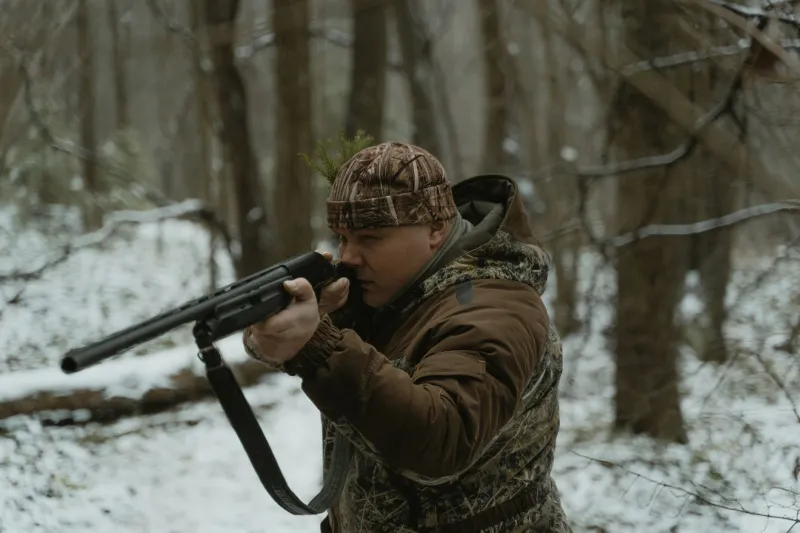
Your Body Is Lying to Your Rifle: The Shot-Wrecking Science of Backcountry Fatigue
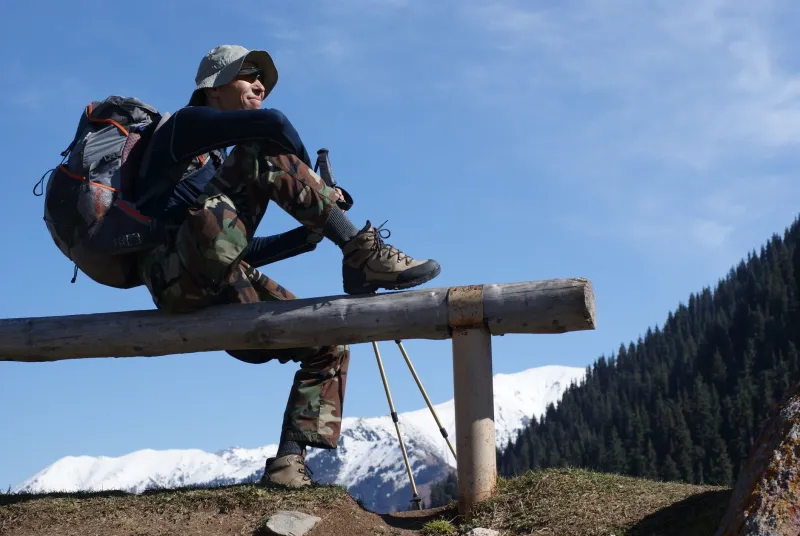
You spent two weekends dialing in your rifle. Sub-half-MOA groups at the bench, consistent data in the app, confidence locked in tight. Then you packed into the backcountry — real country, the kind that chews up your legs and spits out your ambitions — and somewhere between the trailhead and the ridge, something went sideways. Not with the terrain. With you.
The rifle didn't change. The zero didn't drift on its own. But your body? Your body became the problem.
This is the conversation most hunters aren't having, and it's costing them clean shots on animals they worked hard to find.
What Actually Happens to Your Body After a Brutal Pack-In
Let's start with the basics, because the science here matters. When you grind out several miles of steep elevation gain under a loaded pack, your cardiovascular system kicks into overdrive. Heart rate climbs. Blood pressure spikes. Muscles flood with lactic acid. Your respiratory rate increases to compensate. None of this is news to anyone who's hunted real mountains.
But here's what most hunters don't connect to their shooting: all of those physiological responses create physical tremors. Fine motor control degrades. The stabilizing muscles in your core, shoulders, and hands — the ones you rely on for a steady hold — are partially compromised. You're not shaking because you're scared. You're shaking because your body just did something genuinely hard.
Research in military and tactical communities has documented this phenomenon extensively. Soldiers and operators who transition directly from high-intensity movement to a precision shooting task experience measurable degradation in accuracy compared to rested baseline performance. For hunters, the stakes are identical: you've been moving hard, and now you need to be surgically precise.
The Mechanical Side Nobody Talks About
Fatigue tremors get most of the attention, but there's another layer here that's easy to overlook — the mechanical relationship between your body and your rifle changes when you're exhausted.
Cheek weld is a prime example. When you're fresh and focused at the range, your head drops consistently to the same spot on the stock. Muscle memory is clean, the position is repeatable, and your eye alignment is right where it needs to be. After a hard pack-in, that precision erodes. Your neck muscles are tired. Your posture has been compromised by hours under load. You're not settling into the stock the same way, even if it feels like you are. Even a few millimeters of inconsistent eye relief can shift your point of impact meaningfully at hunting distances.
Grip pressure is another culprit. Exhausted hands tend to grip harder — it's a natural compensation response. But a death grip on the forend transmits more of your body's instability into the rifle, and it can actually torque the barrel slightly during the firing sequence. On a free-floated rifle this matters less, but on any setup where the stock makes contact with the barrel channel, grip pressure changes can produce real POI shifts.
Then there's trigger control. The fine motor degradation from sustained exertion makes a clean, surprise break harder to execute. Hunters who've never had a problem with trigger jerk at the bench suddenly find themselves anticipating the shot — flinching before the round breaks — because their neuromuscular system is running on fumes.
The Heart Rate Factor
Elevated heart rate deserves its own section because it's the most immediate and dramatic variable at play.
At rest, most people can manage a reasonably steady hold between heartbeats. At 140+ beats per minute — which is not unusual after a steep final approach to a glassing position — your rifle is moving in a rhythmic pulse that's hard to override with willpower alone. The window between beats where you can execute a clean shot is narrower, faster, and easier to miss.
Experienced military snipers are trained extensively on heart rate management and shot timing. They learn to recognize their own cardiac rhythm and break the shot at the precise moment of minimum movement. Most hunters have never practiced this skill at all, let alone under realistic field conditions.
Practical Solutions for Re-Establishing Accuracy After Hard Miles
The good news is that this problem is manageable. Not eliminated — managed. Here's how serious backcountry hunters are addressing it.
Build a mandatory recovery window into your hunt plan. If you know you're going to be shooting after a hard approach, plan for a minimum of five to ten minutes of low-activity recovery before you need to be ready to shoot. Sit down. Control your breathing. Let your heart rate drop. This isn't weakness — it's strategy. The elk or deer you just spotted isn't going anywhere in the next ten minutes. Don't rush the shot because you're impatient after the pack-in.
Practice shooting fatigued, deliberately. This is the single most underutilized training tool available to backcountry hunters. Before your season, run a training protocol where you perform a hard physical effort — loaded ruck, sprint intervals, stair climbs — and then immediately transition to your shooting position and engage targets. You'll be humbled the first time. But with repetition, you'll develop coping mechanisms: better breathing technique, improved shot timing relative to your heartbeat, and a realistic understanding of your own degraded performance envelope.
Use field positions that maximize stability. A bipod and rear bag at the range is a controlled environment. In the field after a hard approach, use every natural rest available to you — pack, trekking poles in a crossed position, a rock, a deadfall. The more of your body's instability you can transfer to an external support, the less your fatigue matters. Prone with a stable rest is your friend. Offhand is your enemy after a brutal pack-in.
Confirm your zero when conditions allow. If the situation permits and you have a target available, a quick fouling shot or confirmation shot at a known distance before the critical moment is worth its weight in gold. Don't assume the rifle held its zero through the pack-in just because it held it last weekend.
Slow your breathing, not just your heart rate. Box breathing — inhale for four counts, hold for four, exhale for four, hold for four — is a proven technique for rapidly reducing physiological arousal. It won't drop your heart rate to resting in two minutes, but it will take the edge off the tremors and help you regain some fine motor control faster than just sitting and waiting.
The Honest Bottom Line
The backcountry demands a different kind of shooter than the range produces. Range performance is a starting point — a baseline that tells you what your rifle and ammunition are capable of under ideal conditions. Field performance is something you have to earn separately, through deliberate preparation for the specific stressors you'll actually face.
Your perfectly zeroed rifle isn't broken after the pack-in. But you might be, at least temporarily. Knowing that, planning for it, and training around it is the difference between a clean kill and a chip shot you somehow miss on the best buck you've ever seen.
The mountains don't care how good your range card looks. They care what you do when your legs are burning and your heart is hammering and the shot clock is running. Get ready for that version of the problem — because that's the one that actually counts.