One Man, One Ridge, One Problem: The Brutal Math of Hunting Alone
Photo: solo hunter backcountry mountain wilderness elk hunting, via photorecon.net
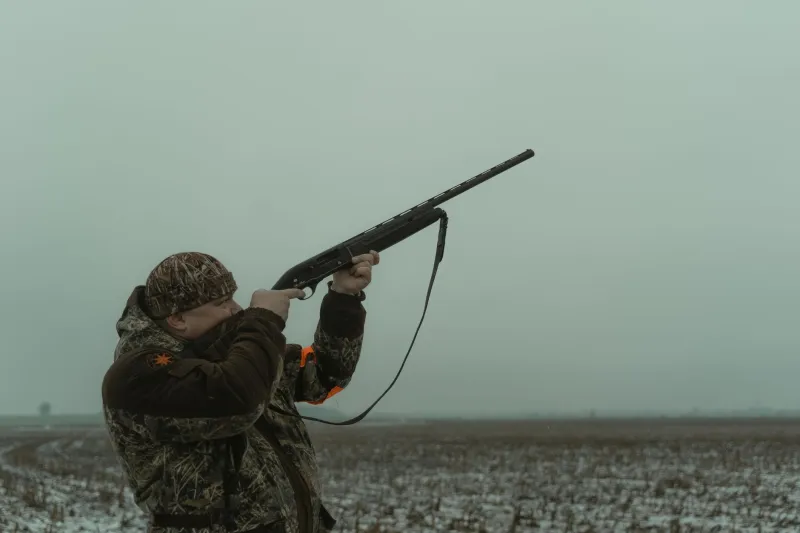
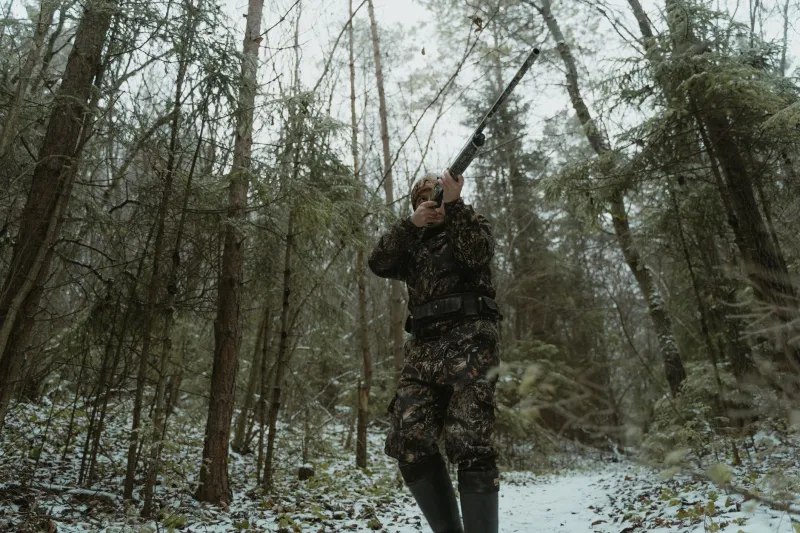
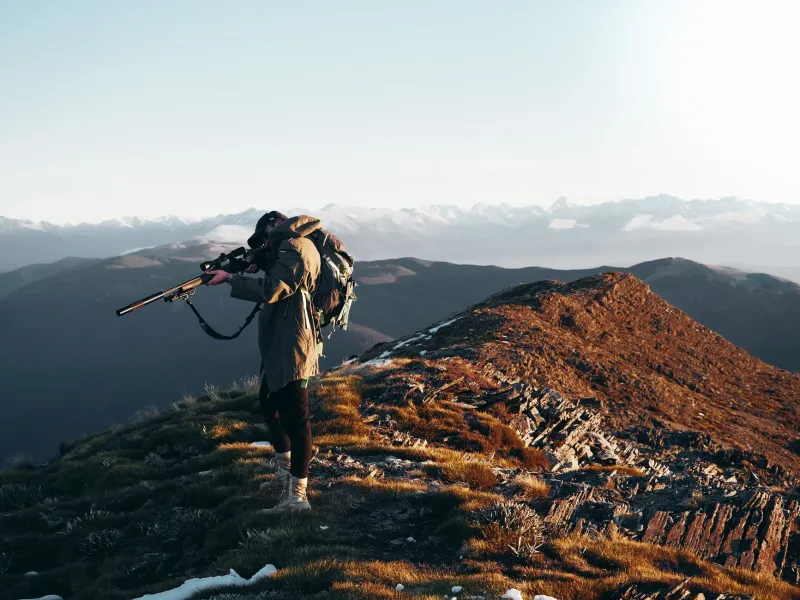
There's a moment that every solo hunter knows. You're glassing a basin at 11,000 feet, the wind is doing something unpredictable, a mature bull is working a wallow 400 yards out, and every decision—whether to move, whether to shoot, whether to hold—is entirely yours. No one to check your read. No one to tell you you're wrong. No one to cover the other angle.
That moment is either the purest thing you've ever experienced in the field, or the most terrifying. Sometimes it's both at once.
The psychology of solo hunting versus team hunting is one of those topics that doesn't get nearly enough honest treatment. We celebrate the lone wolf narrative in outdoor culture—it's romantic, it's self-reliant, it fits the image. But the reality is more complicated, and the hunters who perform best over a career are the ones who understand exactly what going solo costs them, and when it costs them more than it's worth.
What Solo Hunting Does to Your Brain
Hunting alone fundamentally changes how your nervous system processes risk. Without a partner to act as a check on your reasoning, you're running every decision through a single filter—your own. That's a feature and a bug at the same time.
On the upside, solo hunters tend to be more decisive. There's no debate, no committee, no negotiation. You see the shot, you assess it, you take it or you don't. For experienced hunters who've logged serious time in the field, that decisiveness is an asset. You've already internalized the checklist. You don't need someone to confirm what you already know.
The downside is subtler and more dangerous. Humans are wired for social calibration—we unconsciously use other people's reactions to reality-check our own perceptions. When you're alone, that calibration disappears. Fatigue starts to look like confidence. Optimism starts to look like assessment. A marginal shot starts to look like a makeable one, because there's no one standing next to you with a skeptical look on their face.
Research on solo decision-making in high-stakes environments—military, search and rescue, extreme sports—consistently shows that individuals operating alone take on more risk than they intend to, not because they're reckless, but because without external feedback, their internal risk assessment drifts toward whatever they already want to do.
In hunting terms: if you want to make that shot, you'll find reasons to believe it's good. Your partner would have told you to wait.
The Team Dynamic: Not Just a Safety Net
Running with a partner or a small team isn't just about having someone to help pack out an elk. The cognitive advantages of a well-matched hunting team go deep into shot execution, field craft, and long-term decision quality.
A good hunting partner does something invaluable: they hold you to your own standards. When you've already told your buddy you won't shoot beyond 400 yards in wind, he's going to remind you of that when you start eyeing a 450-yard shot with a 15-mph crosswind. That external accountability isn't weakness—it's the same mechanism that makes elite athletic performance possible. Coaches exist for a reason.
Team hunting also distributes cognitive load in ways that directly improve performance. While one hunter is focused on the animal, the other is watching wind indicators, monitoring the animal's body language, tracking shooting lanes, and building a contingency plan. That's a lot of processing that the solo hunter has to do alone—which means something gets shortchanged, usually at the worst possible moment.
There's also the matter of error recovery. When a solo hunter makes a bad call—misjudges distance, misreads wind, pushes too fast—there's no one to catch it before it cascades. A team catches errors early, before they become disasters.
The Liabilities of Both Approaches
Let's be honest about both sides.
Solo hunting's liabilities aren't limited to psychology. There's the physical reality: a medical emergency in the backcountry alone is a very different situation than one with a partner present. A broken ankle on a solo elk hunt in the Selway-Bitterroot is a survival situation. With a partner, it's a bad day.
But team hunting has its own failure modes. Bad partnerships are worse than no partnership at all. A partner who second-guesses you constantly, who hunts at a different pace, or who has different ethical standards for shot selection doesn't add value—they add friction and conflict at exactly the moments when you need clarity. There's also the social pressure dynamic: hunters in groups sometimes take shots they wouldn't take alone because they don't want to look hesitant in front of their partners. That's a different kind of decision-making corruption, and it's just as dangerous.
Group dynamics can also slow you down in ways that cost opportunity. A solo hunter can pivot instantly. A team needs to communicate, coordinate, and sometimes compromise. In fast-moving situations—a bull that's suddenly moving, a window that's closing—that coordination overhead is real.
Knowing When to Toggle
The best backcountry hunters don't commit permanently to either mode. They know what each approach costs and what it buys, and they choose based on the specific demands of the hunt.
Going solo makes sense when you know the terrain intimately, when you're physically and mentally sharp, when the stakes of a bad decision are manageable, and when your experience level is genuinely high enough that your internal calibration is reliable. It also makes sense when your partnership options are limited to people who would make you worse, not better.
Bringing in a partner makes sense when the terrain is unfamiliar, when physical demands are at the edge of your capability, when the shot opportunities are likely to be complex, or when you've noticed your own judgment getting sloppy under fatigue or pressure. It also makes sense whenever the consequences of a mistake—injury, lost animal, dangerous situation—exceed what you can manage alone.
The hunters who get into real trouble are the ones who make this choice based on ego rather than assessment. Solo hunting isn't braver than team hunting. Team hunting isn't smarter than solo hunting. They're different tools for different situations, and confusing them is how good hunters make bad decisions.
The Ridge Doesn't Care About Your Preference
At the end of the day, the mountain doesn't reward romantics. It rewards people who are honest about what they need to perform at their best and humble enough to act on that honesty.
If you hunt better alone, hunt alone—and build the systems that compensate for what you're missing. Satellite communicators, detailed trip plans left with someone reliable, strict personal protocols around shot selection and risk tolerance. Treat your solo hunts like a professional operation, not a personal retreat.
If you hunt better with a partner, choose that partner like your season depends on it—because it does. The right partner doesn't cut your autonomy. They sharpen it.
Either way, know what you're signing up for before you step off the trailhead. The ridge will tell you the truth. The question is whether you've done the work to hear it.