Six Hundred Yards of Comfort, Six Feet of Chaos: The Case Against the Long-Range Obsession
Let me say upfront: I'm not anti-precision. I'm not anti-technology. Long-range shooting has genuine merit, and hunters who invest in the skills to execute ethical shots at distance are doing something admirable. That's not what this is about.
This is about what we've quietly traded away in the process.
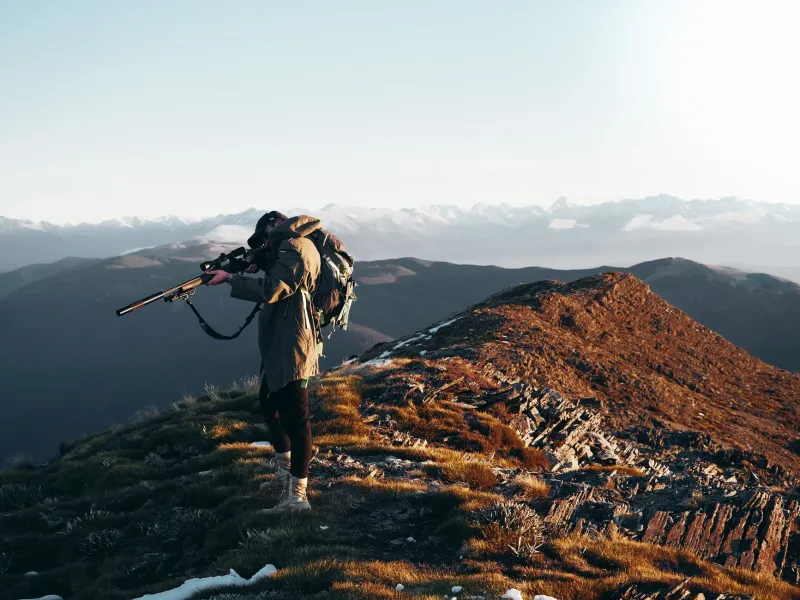
Spend time around hunting culture in 2024 and you'll notice something. The conversations are dominated by external ballistics — dope cards, wind holds, DOPE at distance, chassis systems, turret adjustments. The gear is extraordinary. The knowledge base around long-range shooting has never been more accessible. YouTube can turn a motivated beginner into a passable 500-yard shooter in a single season.
What YouTube can't replicate is the chaos of an actual backcountry encounter. And increasingly, I think we're producing hunters who are well-prepared for the shot they want and dangerously underprepared for the shot they get.
The Shot You Want vs. The Shot You Get
Here's what the long-range culture implicitly promises: if you have the right rifle, the right optic, the right data, and the right conditions, you can turn hunting into a precision exercise. Controlled. Repeatable. Clean.
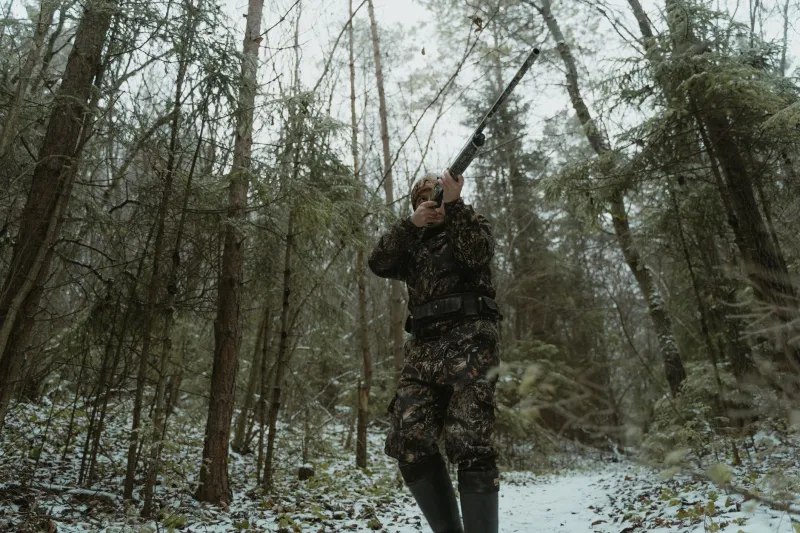
Here's what the backcountry actually delivers: a mule deer buck materializing at 40 yards through lodgepole pine. An elk that stepped into a 30-second shooting window before disappearing into timber. A pronghorn running broadside at 80 yards while you're on a steep sideslope with no rest and a heart rate that's already elevated from a hard stalk.
These aren't edge cases. For anyone hunting real wilderness — not agricultural edges or open-country glassing country, but actual timber and canyon and broken terrain — these are the normal shots. The kind that don't appear in the long-range highlight reel.
The problem isn't that hunters are training for precision. The problem is that many are only training for precision, and precision-at-distance is one of the least transferable skills in field shooting.
What Gets Lost at Close Range
Close-range shooting under pressure is a distinct skill set, and it's being neglected. A hunter who spends 90 percent of their range time behind a bipod at 400 yards has essentially trained themselves to shoot from a stable, comfortable, unhurried position. That's wonderful for that specific scenario. It's actively counterproductive for everything else.
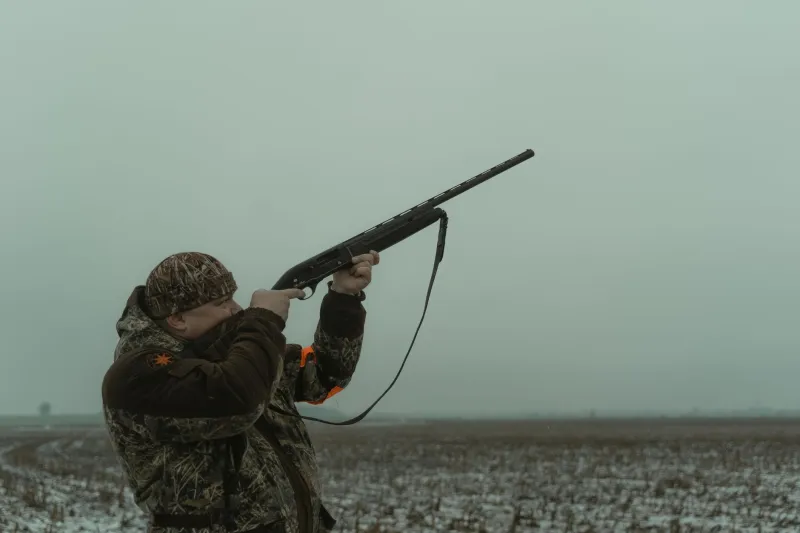
Close-range field shooting demands a different toolkit. Fast target acquisition. Offhand stability. The ability to find a shooting lane through brush or timber without a spotter and a rangefinder and a full setup. The instinctive hold — the kind that doesn't require a ballistic solution because the range is close enough that trajectory is irrelevant and execution is everything.
These skills degrade without practice. And hunters who aren't practicing them are finding out the hard way when the shot shows up at 60 yards instead of 600.
I spoke with a Wyoming outfitter — a man who's guided elk hunters for going on 25 years — who put it bluntly. "I've had clients show up with $6,000 rifles and more dope cards than I can count," he said. "And I've watched them freeze up completely on a bull at 80 yards because it wasn't the shot they'd been training for. The elk didn't cooperate with their setup."
He's not alone in that observation. It's a pattern that experienced guides across the Mountain West are noticing and mostly keeping quiet about because telling a client his $6,000 rifle is part of the problem isn't great for business.
The Fieldcraft Deficit
Long before ballistic calculators and chassis rifles, hunters relied on a set of skills that are increasingly undervalued: reading terrain, understanding animal behavior, closing distance through cover, and making instinctive shots at close range. These aren't romantic throwback skills. They're fundamental hunting competencies that produce more opportunities and more filled tags in real backcountry than any optical upgrade.
A hunter who can close to 150 yards on a mature bull elk — through timber, into the wind, without blowing the stalk — doesn't need to solve a 500-yard ballistic problem. He's eliminated the problem. He's also given himself a shot with dramatically higher probability of a clean, ethical kill.
This is the paradox: the hunters most obsessed with precision at distance are sometimes the ones least likely to put themselves in a position where precision matters less than execution. They've optimized for a scenario they've made artificially difficult by neglecting the fieldcraft that would simplify it.
A Defense of the Messy Shot
There's something worth recovering from traditional hunting culture: comfort with imperfect conditions. The old-timers who hunted with iron sights and lever guns weren't worse hunters because of their gear limitations. In many ways, those limitations forced a kind of discipline — get close, know your animal, pick your shot carefully — that produced hunters who were genuinely dangerous in the field.
Modern gear has expanded what's possible. A 400-yard shot that would have been reckless with 1970s equipment is genuinely ethical with a modern precision rifle, quality glass, and a hunter who has done the work. I'm not arguing against that.
I'm arguing that the culture has overcorrected. That we've fetishized the long-range shot at the expense of the total skill set a backcountry hunter needs. That somewhere between the ballistic app and the chassis rifle, we've started treating close-range shooting as a fallback rather than a core competency.
What Better Looks Like
The best hunters I've encountered aren't the ones with the most sophisticated setups. They're the ones who can execute across the full range of scenarios the backcountry serves up. They can make the 400-yard shot when the terrain demands it. They can also make the 60-yard offhand shot through a gap in the timber when that's what they get. They can stalk. They can read wind without an app. They can adapt.
That's the standard worth chasing. Not yards. Not gear. Not dope cards.
The wilderness doesn't care how good your setup is at 600 yards. It's going to hand you the shot it has available, not the shot you rehearsed. The hunters who understand that — and train for it — are the ones who go home with something to show for the miles.