Slow and Deadly: The Surprising Case for Subsonic Hunting Loads

Speed is the religion of modern ballistics. More velocity, flatter trajectory, more energy on target. It's practically baked into the culture at this point—walk into any gun shop from Montana to Mississippi and you'll hear the gospel of feet-per-second preached with genuine conviction. But a growing number of serious hunters are quietly heretical, and their kill photos are hard to argue with.
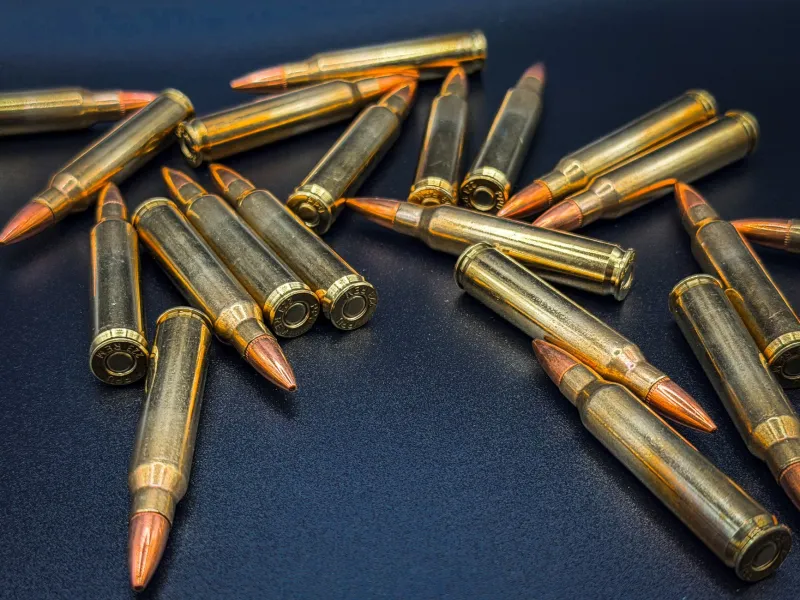
Subsonic ammunition—rounds traveling below roughly 1,125 feet per second at sea level—shouldn't work as well as it does. At least, that's what the conventional wisdom crowd will tell you. They're wrong, and the physics explain exactly why.
What Actually Happens When a Bullet Hits Tissue
Here's where most hunters get the story backwards. Raw kinetic energy isn't what kills an animal cleanly. Energy transfer is. A bullet that zips through tissue at 3,000 fps and exits the far side has done a lot of math and not necessarily a lot of damage. A bullet that decelerates rapidly inside the animal—dumping its energy into vital tissue—is a different story entirely.
Subsonic projectiles, particularly heavy-for-caliber bullets designed for controlled expansion at lower velocities, tend to stay inside the animal longer. That dwell time translates directly into energy deposition. The wound channel geometry is different from what you'd see with a high-velocity round—less hydrostatic shock, yes, but often a wider, more consistent permanent wound cavity through the vitals.
The key word there is consistent. High-velocity bullets can fragment unpredictably, especially when they hit bone at unexpected angles or when temperature affects jacket bonding. Subsonic loads, by contrast, are running at velocities where bullet behavior is more controllable and more repeatable shot to shot.
The Suppressor Connection
You can't talk about subsonic hunting loads without talking about suppressors, and you can't talk about suppressors without acknowledging the accuracy elephant in the room.
Conventional wisdom says suppressors add weight and length to a barrel, shift harmonics, and should theoretically hurt your groups. In practice, the opposite often happens—particularly with subsonic loads. The added mass at the muzzle dampens vibration nodes in ways that frequently tighten groups rather than open them. Combine that with the elimination of muzzle blast disturbing your follow-through, and you've got a recipe for better real-world field accuracy, not worse.
Colorado elk hunter Marcus Webb made the switch to a suppressed .300 Blackout running 220-grain subsonic loads three seasons ago. His verdict is blunt: "I was skeptical. Then I shot a bull at 180 yards and he dropped like a light switch. The bullet didn't exit. Complete energy transfer. I've never recovered a bullet that opened up that cleanly."
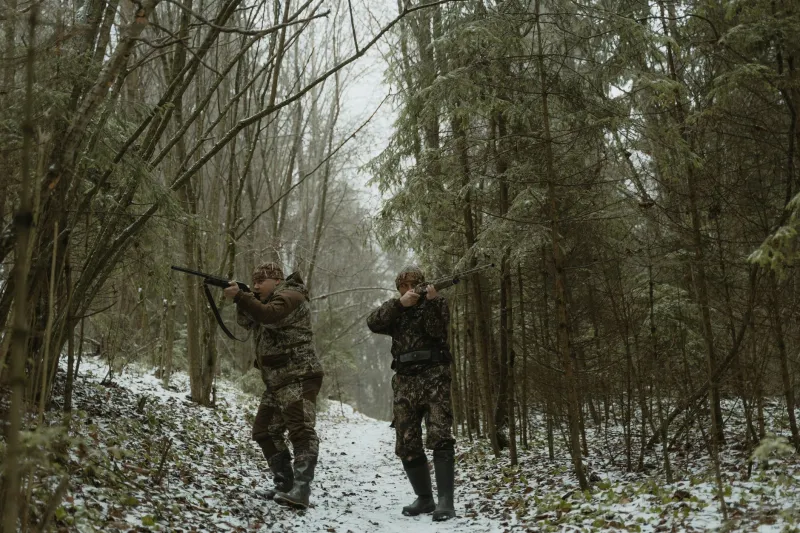
Webb's experience isn't an outlier. Hunters running suppressed subsonic setups in thick timber—where shots rarely push past 200 yards anyway—are finding that the supposed velocity penalty is largely irrelevant inside their actual shooting distances.
Ethical Kill Zones and the Subsonic Advantage
The ethics conversation matters here, and it's one the hunting community needs to have more honestly. Marginal hits at long range with high-velocity rounds produce wounded animals. Full stop. The ballistic energy numbers look great on paper, but if the bullet is traveling at 1,600 fps by the time it reaches a 400-yard target, you're dealing with unpredictable terminal performance from a projectile that was designed to expand at 2,800 fps.
Subsonic hunters self-select for closer shots. That's not a weakness—it's a discipline. Knowing your effective range is limited to 200 yards or less forces you to be a better still-hunter, a better woodsman, and a more patient predator. The shot opportunities you take are higher-percentage, and the terminal performance of the round is operating in its design envelope.
That's not a compromise. That's ethical hunting done right.
The Caliber Question
Not every cartridge translates gracefully to subsonic use. The .300 Blackout was essentially engineered from the ground up for this role, and it shows—it's the benchmark against which everything else gets measured. But hunters running .45-70 loads at subsonic velocities, or heavy .308 projectiles downloaded to stay under the sound barrier, are finding real-world success in appropriate contexts.
The .45-70 case is particularly interesting. At subsonic velocities, a 500-grain cast bullet from a lever gun in heavy brush country is a devastating close-range tool with almost zero noise signature when suppressed. Montana guide outfit Ridgeline Outfitters started running suppressed .45-70 setups for clients on bison hunts two years ago and reported a near-complete elimination of flinch-related misses—a genuine problem when clients are shooting at an animal the size of a compact car.
What You Lose (And Whether It Matters)
Fair is fair—subsonic loads aren't the answer for every situation. Trajectory curves more aggressively past 200 yards, making ranging precision more critical. Wind drift is amplified at lower velocities, which matters in open country. And if you're hunting pronghorn on the Wyoming flats where a 350-yard shot is a routine occurrence, a subsonic setup is the wrong tool.
But for whitetail in the Eastern hardwoods, elk in dark timber, or hog hunting at night with a thermal optic, the subsonic calculus changes dramatically. The conditions favor it. The terminal performance supports it. And the noise reduction—both for your hearing and for the animal's reaction—is a genuine field advantage that high-velocity advocates tend to dismiss too quickly.
Speed kills, sure. But so does precision. And sometimes the slower bullet is the smarter one.