Box of Lies: The Manufacturing Tolerances Quietly Ruining Your Precision Loads
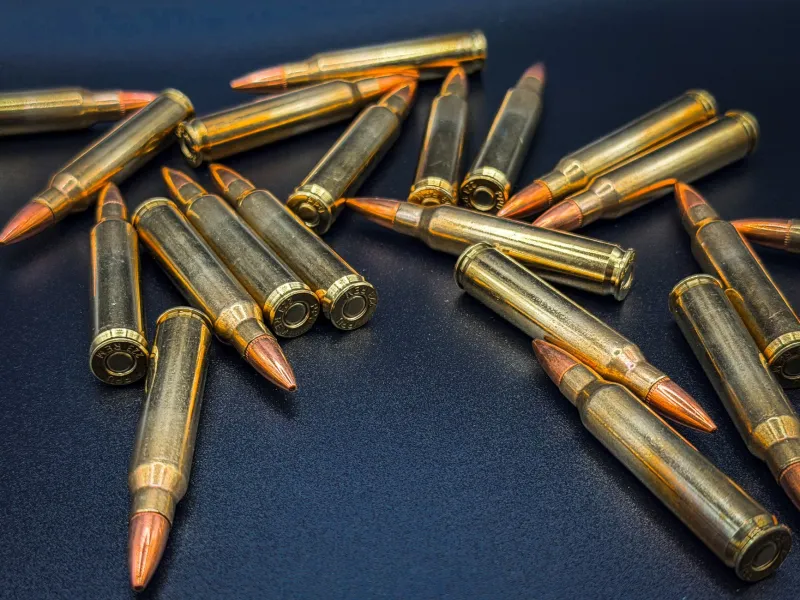
There's a quiet assumption built into the way most hunters approach their ammunition: that if it came from the same box, it's the same round. Same powder charge, same bullet weight, same brass dimensions, same primer seating depth. Consistent inputs, consistent outputs. Makes sense.
It's also not entirely true, and the gap between that assumption and reality gets wider the farther downrange you push your shots.
The Tolerance Stack
Every component in a loaded cartridge is manufactured to a specification—and every specification has a tolerance range. The brass case has an allowable variation in internal volume. The powder charge has a tolerance, typically measured in tenths of a grain. The primer pocket depth, the bullet seating depth, the neck tension holding the projectile in place—all of it varies within acceptable manufacturing windows.
Any one of these variables, in isolation, produces an effect too small to matter much. But they don't exist in isolation. They stack. A cartridge with a slightly generous case volume, a powder charge at the low end of tolerance, a primer seated fractionally shallow, and a bullet with marginally less bearing surface than spec is a fundamentally different ballistic event than the round sitting next to it in the tray—even if they're from the same production run, the same box, and the same lot number.
At 100 yards, this variability might produce a group that looks acceptable. At 400 yards, those same micro-inconsistencies have had time to compound, and what was a half-inch variation at the muzzle has become three or four inches of dispersion at the target.
Where the Inconsistency Lives
Not all variability is created equal. Some sources matter more than others, and understanding the hierarchy helps you know where to look.
Powder charge weight is generally the most consequential variable. Even a 0.3-grain difference in a moderate-capacity case like a .308 Winchester can produce a measurable velocity spread—typically 10 to 20 fps per tenth-grain variation, depending on the powder. That translates directly to vertical dispersion at distance.
Brass case volume is trickier because it's invisible without specialized equipment. Cases from different production runs—or even different positions in the same production run—can have internal volume variations of 2 to 4 grains of water equivalent. That changes the effective pressure curve of every round, affecting both velocity and the consistency of projectile release.
Primer seating depth affects ignition consistency in ways that are hard to measure but easy to observe. A primer seated 0.003 inches shallower than spec fires with a slightly different ignition profile than one properly seated. The result is velocity variation that looks random but isn't—it's systematic variability that your chronograph will confirm if you look for it.
Bullet runout—how concentric the projectile sits in the case neck—affects the initial direction of travel before the bullet even clears the muzzle. Factory ammunition typically runs within 0.003 to 0.005 inches of total indicator runout. That sounds tight. At 600 yards, it's enough to matter.
Testing Before the Hunt: What You Can Actually Do
You don't need a laboratory or a five-figure reloading setup to identify problematic ammunition before the season. You need a chronograph, some patience, and a willingness to keep records.
Step one: Shoot for velocity spread, not just group size. A chronograph tells you what your target can't. Run 20 rounds over the screens and record every velocity. Calculate your extreme spread (highest minus lowest) and your standard deviation. For hunting ammunition, an extreme spread above 40 fps from the same box is a red flag. Standard deviation above 15 fps deserves attention.
Step two: Sort by weight. A digital scale accurate to 0.1 grains is a $30 investment. Weigh 50 rounds from your hunting lot and sort them into weight classes. Rounds that fall more than 3 grains outside the average cluster are worth setting aside. This is a blunt instrument, but it catches the worst outliers.
Step three: Visual primer inspection. Under good light, look at every primer in your hunting lot. Primers seated noticeably proud of the case head are a consistency concern. So are primers that show asymmetric seating. Pull those rounds.
Step four: Cold versus warm testing. This one gets overlooked. Powder burn rates change with temperature, and ammunition that groups well at a 70-degree range session may perform differently at 20 degrees during an early-season elk hunt. If you're hunting cold country, chronograph your loads in cold conditions. The velocity shift can be substantial.
Working With Imperfect Ammo in the Field
Here's the honest truth: even after testing, you're hunting with ammunition that has some degree of variability. The question is how to manage that reality rather than pretend it doesn't exist.
First, know your extreme spread and build it into your confidence intervals. If your load has a 35 fps extreme spread, that's roughly 1.5 to 2 inches of vertical uncertainty at 400 yards with a typical hunting cartridge. That needs to factor into your ethical range calculation—not as a reason to stay home, but as a reason to be honest about what shot you're taking.
Second, use your worst-case group, not your best-case group, when setting effective range limits. Hunters love to quote their best three-shot group. The relevant number is what happens when the stars don't align—because in the field, they often don't.
Third, build a lot number habit. When you find a lot of ammunition that tests well, buy more of it. Lot-to-lot variation in factory ammunition can be significant, and the load that shot lights-out last November may perform differently from a different production run wearing the same box art.
The ammunition industry produces a genuinely impressive product at scale. But scale and perfection aren't the same thing, and every box of rounds you buy is a statistical distribution—not a guarantee. The hunters who understand that are the ones who stop being surprised by the unexplained miss.