Slow Poison: How Your Stored Ammunition Is Quietly Falling Apart Before the Season Starts
You spent real money on that load. Maybe you worked up a custom handload that took three range sessions and a notebook full of data to dial in. Maybe you bought a premium factory offering that finally grouped the way you needed it to. Either way, you boxed it up, stacked it on a shelf, and figured you were set.
Here's the uncomfortable truth: the moment you closed that box, the clock started ticking.
Ammunition degradation is one of those problems that hides in plain sight. The rounds still look fine. They still chamber. They still go bang. But the performance you measured on the bench last spring? That might be a ghost by the time elk season rolls around. Understanding what's actually happening inside that brass — and what you can do about it — is the kind of knowledge that separates hunters who wonder why their field shots went sideways from hunters who never have to wonder at all.
The Chemistry Nobody Told You About
Modern propellants are engineered marvels, but they're not inert. The nitrocellulose-based powders in your cartridges are inherently unstable at the molecular level. Manufacturers add stabilizers to slow the decomposition process, but those stabilizers get consumed over time. Once they're depleted, the powder begins breaking down on its own — releasing nitrogen dioxide gas, generating heat, and accelerating its own deterioration in a feedback loop.
You won't see this happening. But you might smell it. Old, degrading powder often gives off a faint acidic or solvent-like odor that's noticeably different from fresh propellant. If you crack open a box of rounds that have been sitting for years and something smells off, trust your nose. That's not nostalgia — that's chemistry telling you something went wrong.
Primers are equally vulnerable, though for different reasons. The priming compound — typically a lead styphnate mixture in most commercial ammunition — can corrode when exposed to moisture. That corrosion doesn't have to be dramatic to be damaging. Even trace humidity infiltrating a poorly sealed case can compromise the sensitivity and reliability of the primer. You might get ignition. You might get a hangfire. You might get nothing at all. None of those outcomes are acceptable when you're 400 yards out on a once-in-a-lifetime bull.
Temperature Swings Are the Silent Killer
Ask most hunters where they store their ammunition and you'll hear answers like "the garage," "a shelf in the shop," or "a cabinet out in the barn." All of those locations share one brutal characteristic: massive temperature swings across the calendar year.
Heat accelerates every chemical reaction involved in powder decomposition. A garage in Texas or Arizona can hit 120°F in summer. Even in the northern states, an uninsulated outbuilding can swing from 0°F in January to 95°F in July. Every time temperature rises, molecular activity in your propellant increases. Every time it drops, condensation risk goes up. Run those rounds through enough seasonal cycles and you've effectively fast-forwarded the aging process by years.
The practical target is simple: store ammunition somewhere that stays cool and consistent. A climate-controlled space — even a basement that naturally holds around 60°F — is dramatically better than any outbuilding. The goal isn't refrigeration. It's stability. Consistent temperature matters more than low temperature.
Humidity Is Doing Work You Can't See
Moisture is the co-conspirator that makes heat damage worse. Brass is relatively resistant to corrosion, but it's not immune. Green or blue oxidation on case necks or primers is an obvious red flag, but humidity does plenty of damage before it ever reaches that stage.
When humid air cycles in and out of an ammunition storage space — which happens whenever temperature changes — moisture can work its way into the case mouth seal and the primer pocket. Factory-loaded ammunition is typically sealed with a lacquer or sealant at both points, but that protection isn't permanent. It can crack, especially after repeated temperature cycling. Handloads, depending on how the loader prepped the brass, may have minimal sealing at all.
A quality dehumidifier in your storage space and a relative humidity target of 50 percent or below will handle most of this risk. Silica gel packets inside sealed ammunition containers add another layer of protection and are cheap insurance for any rounds you're putting away for more than a season.
What Compromised Rounds Actually Look Like
Before you load a single round into a rifle heading into the field, run a quick audit. It takes ten minutes and it can save a hunt.
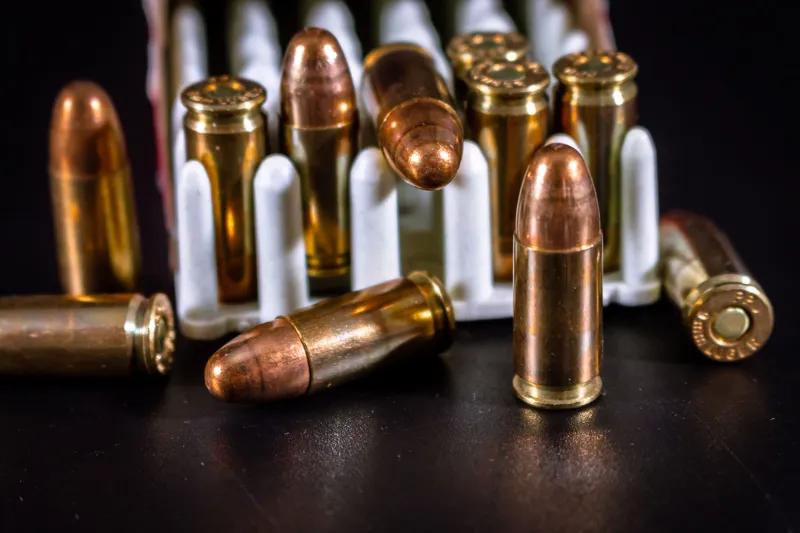
Start visual. Look for any discoloration on the case body or primer — green or blue oxidation is a hard no. Check for case neck cracks, which indicate the brass has become brittle, often from repeated temperature cycling. Inspect the bullet seating; if primers are backing out slightly or bullets look like they've shifted in the case, something has gone wrong with either the seal or the structural integrity of the round.
Next, do the smell test. Open a box and take a slow breath. Fresh powder smells clean and slightly chemical. Degraded powder smells sour, acidic, or like vinegar. If you get that sour note, pull the rounds from your hunting inventory immediately.
Finally, shoot a sample group before season. Not at a target 50 yards away — shoot at the distance you expect to take game. If a load that was printing tight groups last year is now opening up or showing inconsistent velocity (if you have a chronograph, use it), the ammunition has changed. Your rifle hasn't.
Building a Storage System That Actually Works
The fix here isn't complicated, but it does require intentionality. Start with a dedicated storage location — interior of the home, basement, or a climate-controlled safe room beats any outbuilding. A steel ammunition cabinet or a dedicated ammo can setup with sealed lids and desiccant packs inside is better than cardboard boxes on an open shelf.
Label everything with a date. This sounds obvious but most hunters skip it. Knowing that a box of 6.5 Creedmoor loads was built or purchased in March of a given year lets you make intelligent decisions about rotation. First in, first out. Older stock gets shot at the range or during practice. Fresh loads go into the hunting inventory.
For serious hunters who handload, consider sealing case mouths with a light application of case sealant and crimping primers when appropriate for the cartridge. It's a small extra step that pays dividends if rounds are going into long-term storage.
The Pre-Season Audit Is Non-Negotiable
Think of your ammunition inventory the same way you think about your optics check or your rifle zero confirmation — it's not optional. The ballistic work you did to build confidence in a load only holds if the load is still the same load.
Temperature changes, humidity, time, and chemistry don't care about the effort you put in at the bench. They work quietly, consistently, and without mercy. But they're also predictable. Understand the process, control the environment, audit before you go, and the ammunition you pull out of storage will perform like the ammunition you put in.
Out here at Lost River, where the shot has to count the first time, that's not just good practice. It's the whole game.