Ghost Wind: The Invisible Crosswind Layers That Are Killing Your Long-Range Shots
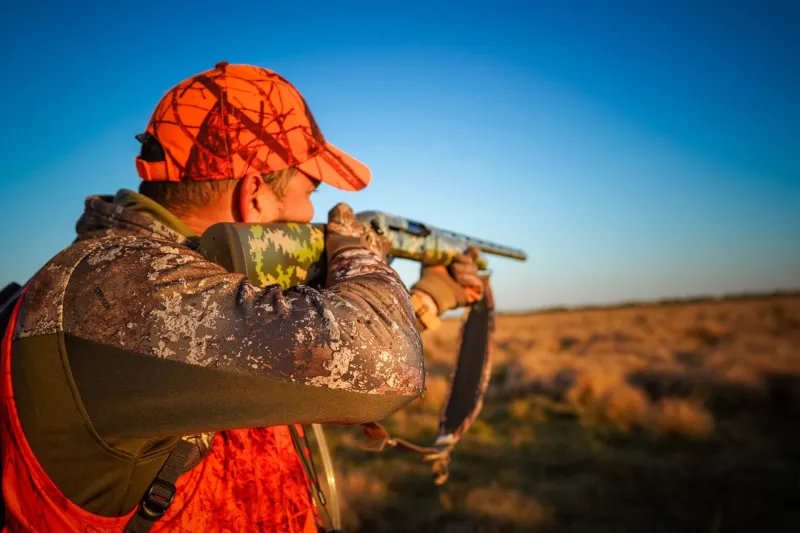
You did everything right. You confirmed your zero at the range, built a solid dope sheet, dialed for distance, checked the wind at your position — barely a whisper, maybe two miles per hour from the left — and broke what felt like a perfect shot. The bullet sailed six inches wide. You chalked it up to a flinch, maybe a bad read, and moved on.
But here's the uncomfortable truth: the wind at your muzzle is almost completely irrelevant to where your bullet lands at 600 yards. What happens in the airspace between you and your target — airspace you cannot see, cannot feel, and often cannot directly measure — is where long-range shots actually live or die.
Welcome to the world of ghost wind. It's real, it's everywhere in backcountry terrain, and most hunters have absolutely no idea it's eating their ballistic solutions alive.
Your Dope Sheet Only Knows One Wind
Every ballistic app on the market — from the free ones to the $150 professional solvers — operates on a single fundamental assumption: that the wind value you input applies uniformly across the entire flight path of your bullet. You punch in eight miles per hour at a full-value crosswind, and the solver spits back a hold. Simple.
Except wind almost never works that way in the field, especially in the kind of broken, vertical terrain most serious hunters are working in.
Wind speed and direction vary dramatically with altitude. Even on a day that feels calm in a valley bottom, air moving across a ridgeline 200 feet above your bullet's flight path can be running at double or triple the speed you're reading at ground level. Your bullet, which spends most of its flight time at varying heights above the terrain, passes through all of it — and your solver accounts for none of it.
Meteorology has a name for this: wind shear. It's the change in wind speed or direction over a relatively short vertical distance, and it's one of the most consistent features of mountain and foothill environments. The same pressure gradients that make western ridge hunting so productive in the fall are often generating significant shear layers right through your bullet's flight corridor.
Terrain Is a Wind Machine
Flat-country shooters have it comparatively easy. Their wind problems are mostly a matter of speed and angle — still complicated, but at least somewhat predictable. Backcountry hunters are dealing with something far messier.
Ridges, draws, saddles, boulder fields, and canyon walls don't just block wind — they redirect it, compress it, and create chaotic mechanical turbulence that can shift direction by 90 degrees or more within a span of a few hundred yards. A bullet traveling across a shallow draw might encounter a pocket of near-still air in the depression, then get hammered by an accelerated flow as it climbs the far slope's boundary layer.
This is terrain-induced turbulence, and it's essentially impossible to model without direct measurement across the entire flight path. The wind you're reading at your position tells you almost nothing about what's happening 400 yards downrange where the terrain profile changes.
Canyons are particularly brutal. Air flowing along a canyon axis can behave entirely differently from air moving perpendicular to it. A crosswind at your position might be a direct headwind or tailwind through the middle third of your bullet's path, then snap back to a crosswind component near the target. The net deflection from that kind of variable exposure is not the same as a steady crosswind of the same average speed — and your ballistic solver will give you the wrong answer every single time.
Reading What You Can't See
So what's a hunter actually supposed to do about wind they can't directly measure? The answer isn't to throw up your hands — it's to get smarter about the indirect evidence that's always present in the field.
Vegetation is your best friend. Different plants respond to wind at different thresholds. Grasses begin moving around three to five miles per hour. Small brush starts to sway noticeably around eight to ten. Tree canopy movement becomes significant above fifteen. When you're glassing a shot, don't just check the wind at your position — actively look at every patch of vegetation along the projected flight path and between you and the target. Inconsistencies in how different areas are moving tell you a lot about what's happening in that airspace.
Mirage is another underused tool. Heat shimmer visible through your scope doesn't just reveal temperature gradients — the direction and speed of mirage movement is a direct indicator of wind at the target end of your shot. A boiling mirage with no lateral movement means nearly calm conditions downrange. Mirage running hard to one side at mid-distance tells you something very different from the calm you're sitting in.
Cloud shadows are slower but useful for longer reads. Watch how shadow edges move across the terrain between you and your target. That movement rate gives you a rough wind speed approximation at the altitude the clouds are casting from — which may be closer to your bullet's mid-flight altitude than the surface reading you're getting.
Building a Better Mental Model
The hunters who consistently perform well at distance in variable terrain have one thing in common: they've stopped thinking of wind as a single number and started thinking of it as a column of moving air with different properties at different heights and positions along the flight path.
That mental shift changes how you approach a shot setup. Instead of checking wind once and dialing, you spend time building a picture of the entire corridor. You look for convergence — multiple indicators pointing to similar conditions — before committing to a hold. And you get honest about the shots where the wind picture is too inconsistent to trust.
Some of the best long-range hunters in the intermountain West have a hard rule: if they can't get a consistent read from at least two independent wind indicators along the flight path, they don't take the shot at distance. They close the gap instead.
That's not timidity. That's the kind of disciplined field craft that turns a dope sheet from a liability into an actual tool.
When the Solver Gets Humbled
Modern ballistic technology is genuinely impressive. Kestrel units with applied ballistics, smartphone solvers running G7 drag models, rangefinders with built-in atmospheric compensation — this stuff works. On calm days with steady, readable wind, it works extremely well.
But no solver currently on the market can account for wind shear, terrain turbulence, or the vertical variation in crosswind speed unless you're feeding it data from multiple points along the flight path — which essentially no one is doing in a hunting scenario.
Your dope sheet is a model of a simplified world. Ghost wind is what happens in the real one. The gap between those two things is where missed shots live.
The fix isn't to distrust your technology. It's to understand exactly what your technology is and isn't accounting for, so you can apply judgment where the math runs out. That combination — solid ballistic data plus genuine field-reading skill — is what actually closes the distance between a clean miss and a clean kill.