Shimmer and Miss: How Heat Distortion Is Costing Long-Range Hunters Their Best Shots
You've done everything right. The dope is dialed, the wind is manageable, your position is solid. You settle into the reticle, steady your breathing, and squeeze the trigger on what should be a clean, ethical shot. Then nothing. Or worse — a hit that's inches off from where you aimed.
No wind call error. No flinch. Just that slow, lazy shimmer between you and the animal — the kind that turns a sharp target into a watercolor painting.
Heat mirage is one of the most underestimated shot-wreckers in long-range hunting. It doesn't care about your ballistic app or your expensive glass. It operates on physics, and unless you understand what it's doing to your sight picture and your bullet's path, it will keep costing you.
What Mirage Actually Is (And Why It's Not Just Visual Noise)
At its core, mirage is a density problem. When the ground heats up faster than the air above it — think black rock, bare desert hardpan, or sun-baked alpine talus — you get layers of air at drastically different temperatures stacked on top of each other. Hot air is less dense than cool air. Light bends when it passes through those density transitions, a process called refraction.
What you see through your scope is not a direct optical path to the target. It's a bent one. The image you're looking at is being refracted toward you along a curved line, which means the animal you think is standing in one spot may actually be displaced — sometimes laterally, sometimes vertically — from where your crosshairs say it is.
At 300 yards, that displacement might be a few inches. At 600 yards or beyond, it can be enough to push a shot from a clean lung hit to a gut shot or a clean miss. In a hunting context, that's the difference between a filled tag and a long, miserable tracking job — or worse, a lost animal.
The Two Flavors of Mirage You'll See in the Field
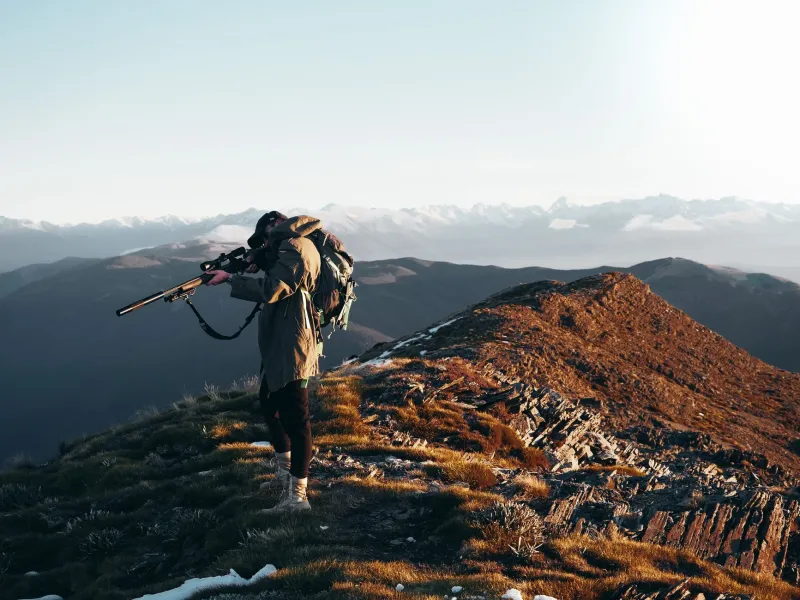
Not all mirage behaves the same way. Learning to read it is a skill that pays dividends, especially if you're hunting desert mule deer, pronghorn, or high-elevation elk in late summer.
Boiling mirage is what you see when there's little to no wind. The shimmer moves straight up, bubbling off the ground in vertical waves. This type creates the most unpredictable image displacement because the distortion column between you and the target is constantly churning. Your target's outline softens and shifts in ways that are nearly impossible to compensate for in real time.
Running mirage happens when wind is present. The heat waves lean and flow in the direction of the breeze. Ironically, this is more manageable — the distortion is more consistent and directional. Experienced long-range shooters actually use running mirage as a wind-reading tool, watching the angle and speed of the shimmer to estimate wind value at various points downrange.
The dangerous middle ground is when mirage is present but the wind is light and inconsistent — shifting from boiling to running and back. That's when your sight picture becomes genuinely unreliable.
How Mirage Interacts with Your Bullet
Here's where it gets interesting — and where a lot of hunters get it wrong. Many assume mirage is purely a visual problem. You see the target in the wrong spot, you shoot at the wrong spot, you miss. Simple enough.
But mirage also affects the air your bullet travels through. Those same density gradients that bend light also create turbulence and variable air resistance along the bullet's flight path. The effect is relatively minor at short distances, but at extended ranges — especially across open desert flats or high-altitude meadows where heat buildup is severe — you can see meaningful vertical dispersion caused by the bullet passing through pockets of hot and cool air at different densities.
This isn't the dominant factor in most hunting scenarios, but it compounds the visual problem in a way that makes mirage a double threat: you're not sure exactly where the animal is, and your bullet isn't flying through perfectly predictable air to get there.
Field Techniques That Actually Help
The good news is that mirage is manageable if you're disciplined about it. Here's how serious hunters and long-range competitors handle it in the field.
Drop your magnification. This sounds counterintuitive, but high magnification amplifies mirage dramatically. Dialing back from 20x to 10x or even 8x can clean up your sight picture significantly. You lose some target detail, but you gain a more honest representation of where the animal actually is. A slightly blurrier target in the right location beats a crystal-clear image of the wrong one.
Wait it out — if you can. Mirage is worst during midday when solar heating is at its peak. Early morning and late evening shots, when ground temperature and air temperature are closer together, produce far less distortion. If you're glassing a target mid-afternoon and the shimmer is severe, patience is a legitimate strategy. Let the thermals settle.
Use your mirage to read wind. If you're in a situation with running mirage, don't curse it — use it. Watch how the waves are moving at various distances between you and the target. That tells you wind direction and gives you a rough sense of wind speed. It won't replace a Kestrel, but it adds a layer of real-time data.
Shoot through a narrow window. Even in bad mirage conditions, there are often brief moments — a few seconds at most — where the distortion clears or settles. Experienced shooters learn to read the rhythm of the shimmer and time their shot to coincide with those windows. It requires patience and trigger discipline, but it's a real skill that pays off.
Reposition if possible. Changing your shooting position by even a few feet vertically can take you out of the worst of the heat layer hugging the ground. If you're shooting prone across a flat, try sitting or finding a slightly elevated rest. Getting your line of sight above the worst of the ground-level thermal activity can make a meaningful difference.
The Glass Factor
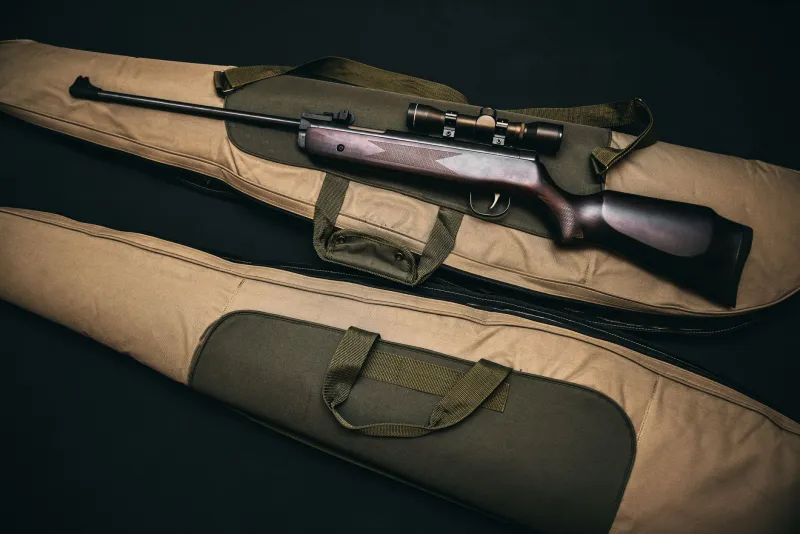
Not all optics handle mirage the same way. High-end glass with superior optical coatings and precise lens grinding tends to produce a cleaner image under mirage conditions than budget glass. This isn't just marketing — the way a scope resolves contrast and handles aberrations matters when the image is already being compromised by atmospheric conditions.
If you're hunting in environments where mirage is a regular factor — and if you're chasing late-season desert muleys or August elk, it absolutely is — investing in quality glass pays dividends beyond just magnification. Look for scopes with good edge-to-edge clarity and minimal chromatic aberration. Mirage already muddies the picture; your optic shouldn't add to the problem.
Respect the Shimmer
Mirage doesn't get talked about enough in hunting circles. It's one of those invisible variables that experienced hunters quietly account for while newer shooters scratch their heads wondering why their doped-in load hit low and left.
Understanding the physics — and building the field habits to compensate — is the kind of knowledge that separates hunters who are dangerous at distance from those who are merely capable at the range. Out here where the wild meets the shot, the environment is never neutral. Heat is just another adversary. Learn to read it, and you'll stop giving it free shots at your season.