Same Load, Different Mountain: The Elevation Problem Nobody Warned You About
You know the feeling. You've run hundreds of rounds through a load development process that would make a benchrest competitor nod in approval. Sub-half-MOA groups. Consistent velocity. Primers seated just right. You've got a recipe that flat-out works — at home, at your local range, in the conditions you know.
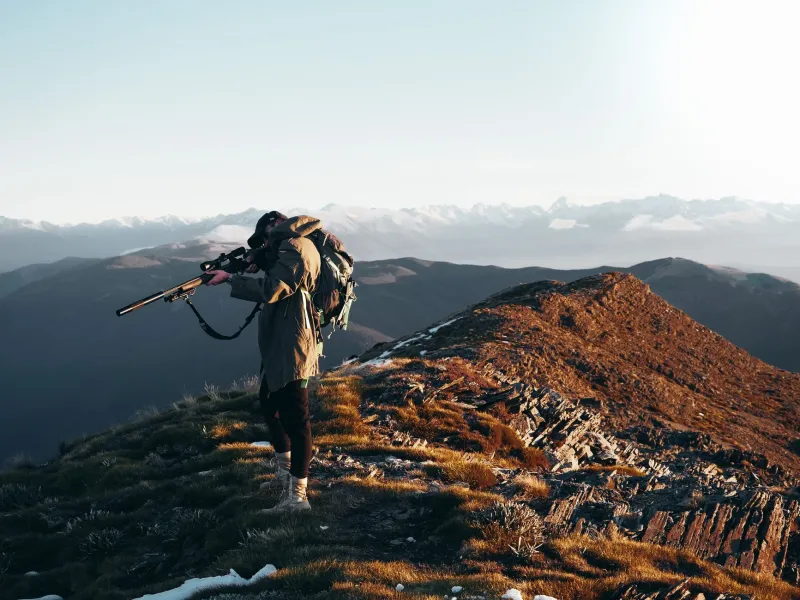
Then you haul yourself and your gear to a Colorado elk camp sitting at 9,200 feet, and somewhere between the trailhead and the first morning's glassing session, your confidence starts to crack. Your first cold-bore shot is off. Your groups open up. Your data doesn't match your impacts. And you're standing there in the thin air wondering what went wrong.
Welcome to what we call the ballistic lottery — the maddening reality that a load which performs flawlessly at one elevation can behave like a completely different animal somewhere else. It's one of the least-talked-about problems in handloading, and it costs hunters real opportunities every single season.
Air Density Is Doing More Work Than You Think
Most shooters understand, at least loosely, that thinner air at altitude means less drag on a bullet in flight. That part actually works in your favor — your projectile retains velocity a little better, and wind drift is slightly reduced. If that were the whole story, elevation changes would be a minor inconvenience at worst.
The problem is what happens before the bullet ever leaves the barrel.
Powder combustion is a chemical process, and like most chemical processes, it doesn't exist in a vacuum — literally or figuratively. The air density inside your chamber, the temperature of the propellant, and the atmospheric pressure surrounding your rifle all play a role in how completely and how quickly your powder burns. At sea level, a powder column that's dialed in to produce a specific pressure curve behaves predictably because the environment it's operating in is consistent with where it was tested.
Push that same cartridge to 9,000 feet, and you've changed several variables simultaneously. Lower ambient pressure affects how gases behave during ignition. Temperature swings — and mountain mornings are cold — change the burn rate of your powder in ways that can shift your velocity by 50 to 100 feet per second or more. That's not a rounding error. That's the difference between a clean hit and a marginal one at distance.
The Case of the Disappearing Node
Talk to enough serious handloaders who hunt across different regions, and you'll hear variations of the same story.
A hunter out of western Tennessee spent the better part of a summer load-developing a 6.5 Creedmoor recipe around a specific slow-burn powder. He found a beautiful velocity node — tight standard deviations, consistent pressure signs, excellent accuracy. Tested it through a full summer and into early fall. Shot after shot, it delivered.
He made it to a New Mexico mule deer hunt in mid-October. Elevation near camp was around 7,800 feet. Temperatures at shooting time were in the low 30s. His first range session at altitude showed groups nearly double what he'd seen at home, and his point of impact had shifted noticeably. The load that had been his pride and joy was suddenly unreliable.
What happened? The combination of lower temperature — which slows burn rates in most powders — and reduced atmospheric pressure changed the pressure curve enough to push him off the velocity node he'd found at home. He wasn't at a different point on the accuracy ladder; he was on a completely different ladder.
Powder Selection Matters More Than Most Guys Admit
Not all powders respond to elevation and temperature changes equally. This is where a little extra research during load development pays serious dividends.
Temperature-stable powders — many of the newer formulations from Hodgdon's Extreme line, for example — are specifically engineered to minimize velocity variation across a wide temperature range. If you're hunting anywhere with meaningful elevation change or dramatic morning-to-afternoon temperature swings, these powders should be near the top of your list during development.
Slow-burning powders, which many hunters gravitate toward for magnum cartridges and heavy bullets, tend to be more sensitive to environmental conditions. That's not a reason to avoid them entirely, but it's a reason to test them hard under conditions that mirror where you're actually going to hunt — not just where you live.
If your home range is at 500 feet and your hunt is at 8,000, you owe it to yourself to test your load at altitude before the season. Drive up into the mountains. Find a public range. Shoot in cold morning air. That's the only way to know what your load actually does where it matters.
Building a Load That Travels
There's no magic formula that makes a handload immune to elevation and climate changes, but there are habits that tighten the margin considerably.
Start with temperature-stable propellants. Reduce the environmental variable at the powder level before you worry about anything else. A powder that holds velocity within 15 fps across a 60-degree temperature swing is a foundation you can build on.
Work up your load conservatively. Hunters who push maximum pressure loads at home are essentially leaving no room for the pressure spikes that cold weather and altitude shifts can introduce. A load developed 2-3% below maximum gives you buffer when conditions change.
Keep a field data log. Chronograph your loads at different conditions when you get the chance. Note the temperature, elevation, and resulting velocity. Over time, you build a real picture of how your specific combination behaves across environments — and that data is worth more than any ballistic chart.
Confirm zero at altitude. If you're driving or flying to a hunt, build a range session into your arrival day whenever possible. Even a 10-shot confirmation at your hunting elevation will tell you whether your data holds or whether you need to make adjustments before you're in the field.
Consider your ballistic solver inputs carefully. Modern apps like Applied Ballistics or Hornady 4DOF can account for density altitude when you input current conditions. But garbage in, garbage out — if you're running sea-level velocity data at high altitude, your solver is working with wrong numbers from the start. Chronograph at altitude if you can, or at minimum use the solver's atmospheric correction features with accurate local data.
The Mountain Doesn't Care About Your Bench Work
Here's the uncomfortable truth that the handloading hobby sometimes glosses over: all that meticulous work at your home bench is a starting point, not an ending point. The mountain operates on its own rules, and it has no interest in the beautiful groups you shot last July.
The hunters who consistently connect at altitude — in cold, in thin air, on animals that took real effort to find — are the ones who tested their systems under realistic conditions and built in enough margin to absorb the variables they couldn't fully predict.
Your load recipe isn't finished when it shoots well at home. It's finished when it shoots well where you're actually hunting. Until then, you're playing the ballistic lottery — and the house doesn't always lose.