Hunting After Dark: The Night Vision and Thermal Revolution That's Splitting the Hunting World in Two
Five years ago, if you showed up to a hog lease in Texas with a thermal monocular and a night-vision-equipped AR, you were the guy with the exotic gear. Today, you're just another hunter. The technology moved that fast—from a niche military-surplus curiosity to a mainstream hunting tool that's reshaping how a significant portion of American hunters approach the field.
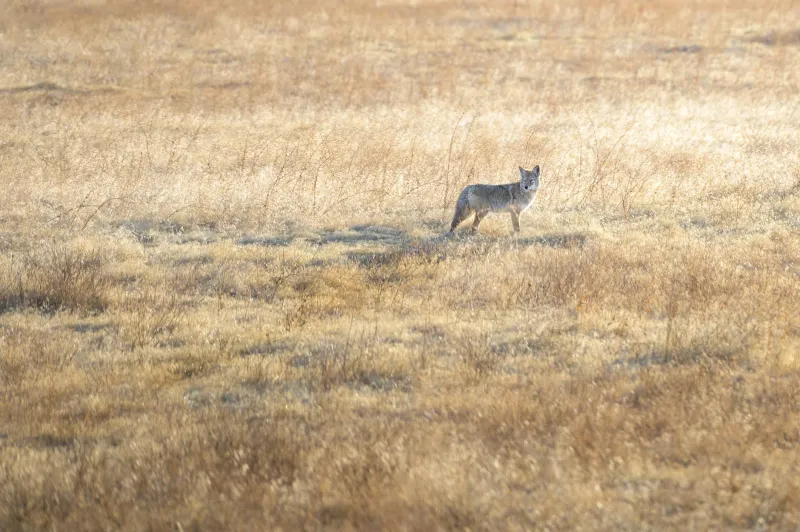
And it's not just hogs. Coyote hunters, predator callers, and varmint shooters across the country have embraced thermal and night-vision platforms with genuine enthusiasm. The technology works. Sometimes shockingly well. Which is exactly why it's become the most contentious gear debate in hunting since suppressors went mainstream.
What the Technology Actually Does
Let's separate the two technologies because they get conflated constantly, and they're genuinely different tools.
Night vision amplifies available light—moonlight, starlight, ambient glow—to produce a visible image in low-light conditions. Traditional image-intensifier tubes (Gen 2, Gen 3) are the gold standard for clarity, but digital night-vision units have closed the gap considerably and come in at price points that make them accessible to average hunters. Quality Gen 3 units still run $2,000–$5,000 for a standalone monocular, but capable digital options now exist in the $400–$800 range.
Thermal imaging detects heat signatures rather than amplifying light. It doesn't care about ambient illumination at all—it can see a deer's body heat through total darkness, light fog, and even light vegetation. Thermal is fundamentally different from night vision because it's not showing you what the eye would see with more light; it's showing you a heat map of the environment. A whitetail bedded in a thicket that would be completely invisible to night vision lights up like a lantern on a thermal screen.
For hunting applications, thermal has become the dominant technology for detection and scanning, while night vision is often preferred for shooting because it provides a more naturalistic image for precise shot placement. Many serious predator hunters run both—thermal for finding, night vision for the shot.
Where It's Legal—And Where It Absolutely Isn't
Here's where the conversation gets complicated fast, and where hunters absolutely need to do their homework before spending money on this gear.
In the United States, the legality of night hunting and the use of night-vision or thermal equipment is governed at the state level, and the patchwork of regulations is genuinely bewildering. A quick breakdown of the general landscape:
Where it's broadly permitted: Texas is the most permissive state in the country for night hunting. Wild hogs, coyotes, and other non-game species can be taken at night with thermal and night-vision equipment with minimal restriction. Several other southern and plains states have similarly permissive rules for specific species, particularly feral hogs and predators.
Where it's restricted: The majority of states prohibit the use of artificial light or night-vision equipment for deer, elk, and other big game. This isn't a gray area—it's a hard line, and violations carry serious consequences including loss of hunting privileges.
Gray areas: Some states allow thermal for spotting but not for shooting. Others permit it for certain predator species but not others. A few states are actively revising their regulations as the technology becomes more widespread and wildlife agencies grapple with how to address it.
The bottom line: before you mount a thermal scope on any rifle intended for big game, verify your state's specific regulations for that species. Don't rely on what worked in another state or what someone told you at the gun counter.
Performance in the Real World
The marketing materials for thermal and night-vision optics tend toward the spectacular. The real-world experience is more nuanced.
Thermal is genuinely extraordinary for detecting animals. Experienced hog hunters in Texas report that thermal scanning reveals animals they would never have found with traditional methods—hogs bedded in heavy cover, coyotes working field edges 400 yards out, animals that daylight hunting pressure has trained to be nocturnal. For species that have adapted to avoid human contact during legal hunting hours, thermal hunting is a legitimate management tool.
The limitations are real, though. Thermal imaging struggles in rain and heavy fog, which scatter infrared radiation and degrade image quality significantly. Cold ambient temperatures can reduce the thermal contrast between an animal and its surroundings. And while a thermal scope can show you that there's a deer-sized heat signature in the brush, it cannot reliably help you identify antler configuration or assess shot placement the way a quality daylight optic can.
Night vision has its own tradeoffs. Even quality Gen 3 units require some ambient light to function well. New moon nights in heavy timber can push even good equipment to its limits. Battery life is a genuine field concern, particularly in cold weather where lithium cells drain faster than expected.
The Ethical Fault Line
Legality and ethics aren't the same thing, and serious hunters know it. The debate within the hunting community about night vision and thermal isn't primarily about what's legal—it's about what hunting is supposed to be.
The traditionalist argument is straightforward: hunting has always involved accepting a degree of disadvantage relative to the game. The animal's superior senses—its nose, its hearing, its ability to disappear into terrain—are part of what makes the pursuit meaningful. Technology that eliminates the darkness as a refuge for prey changes the fundamental nature of the encounter.
The counter-argument is equally coherent: hunters have always adopted technology that improves effectiveness, from rifled barrels to laser rangefinders to ballistic calculators. Feral hogs cause billions of dollars in agricultural damage annually. Coyote predation on livestock and deer fawns is a genuine wildlife management issue. If thermal technology makes lethal control of these animals more efficient, that's a conservation benefit, not an ethical compromise.
Both arguments have merit, and the honest answer is that context matters enormously. Using thermal to manage feral hogs on a Texas ranch is a fundamentally different activity than using it to hunt whitetail deer in November. The hunting community is going to have to work through where those lines are—and it's a conversation worth having before regulators make the decision for us.
Where This Is Headed
The technology isn't going backward. Prices are dropping, image quality is improving, and the gear is becoming more accessible every year. Within a decade, thermal monoculars capable of detecting deer at 500 yards will likely be available for under $200. The regulatory and ethical frameworks we build now will determine how that capability gets used.
For hunters who operate in states and species contexts where this technology is legal, the performance case is compelling and the gear is worth serious consideration. For everyone else, understanding what the technology does—and what it means for the future of hunting—is increasingly important whether you plan to use it or not.
The darkness used to belong to the animals. That's changing. Whether it should is a question the hunting community needs to answer for itself.